How to tell planets from stars with the naked eye
Two simple tests separate wanderers from fixed stars — plus how to identify Venus, Jupiter, Mars and Saturn without a chart.
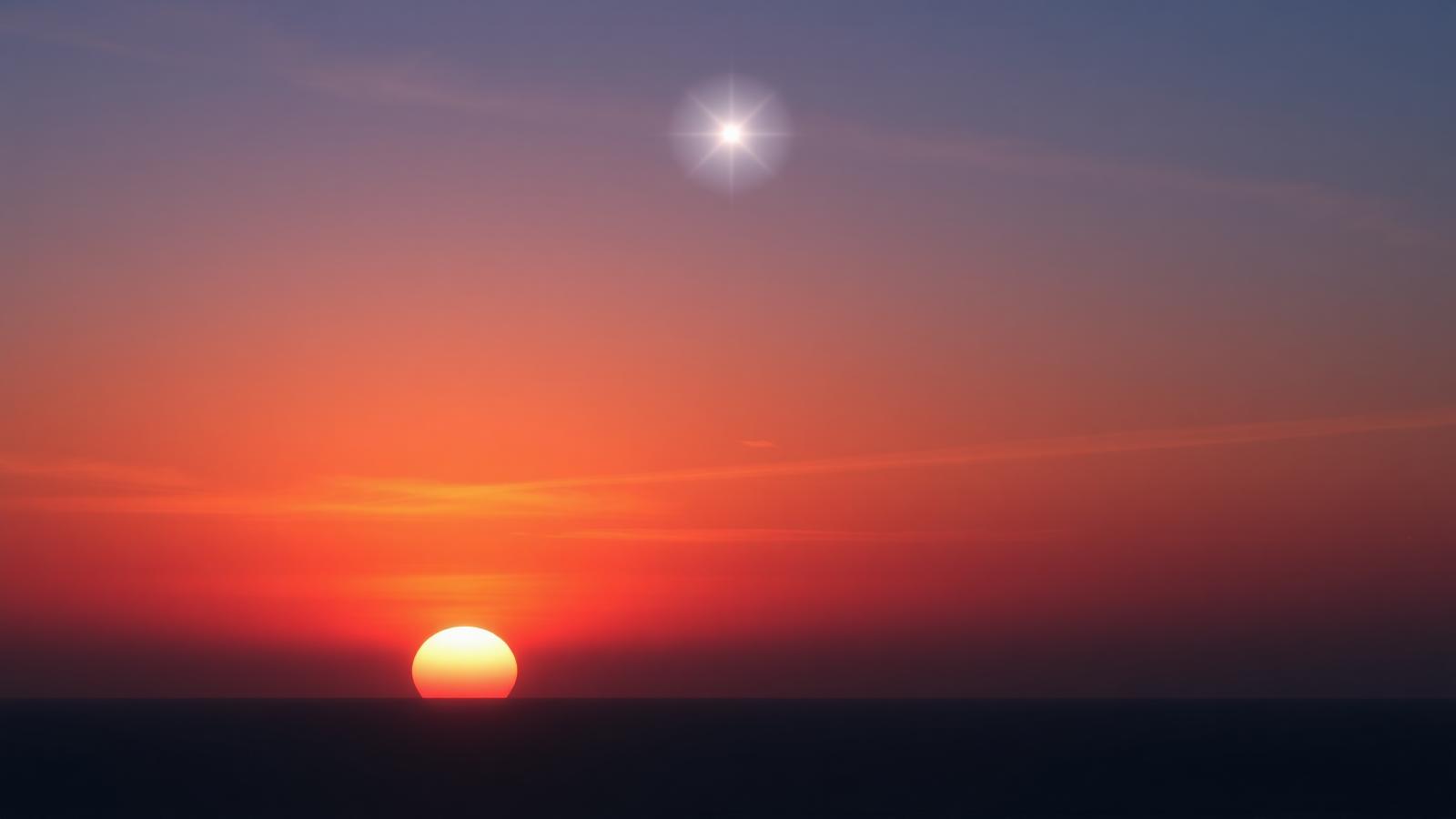
Every clear night, there are usually one or two "stars" in the sky that aren't stars at all. They're planets — worlds in our own Solar System, close enough that sunlight reflects off them and reaches us as a distinct point of light. Some of them, like Venus and Jupiter, easily outshine every actual star in the sky. Learning to tell them apart is a five-minute skill that pays off for the rest of your life: you'll never look up again without instantly recognising the bright wanderers among the fixed stars.
This guide covers the two reliable tests (twinkling and position), then walks through how to identify each naked-eye planet — Venus, Jupiter, Mars, Saturn, and occasionally Mercury — without any app or chart.
Test 1: stars twinkle, planets don't
Look at a bright point of light in the sky. Does it flicker, sparkle, or change colour rapidly? That's a star.
The physics: stars are so far away that even the largest telescopes see them as pure point sources. When starlight passes through Earth's atmosphere, small pockets of air at different temperatures act as randomly shifting lenses, bending the beam this way and that. The result is that a star's single ray flickers on and off many times per second — you perceive it as twinkling ("scintillation" in astronomy).
Planets are much closer, and although they still look like points to your eye, they actually present a tiny disc rather than a true point. The multiple rays coming from different parts of the disc average out the atmospheric flicker. So planets shine with a steady, calm light. They don't twinkle.
There are exceptions. When a planet is very low on the horizon you're looking through much more atmosphere, and even planets will twinkle a little. And when the atmosphere is very still (an astronomer's "good seeing"), a distant bright star might barely twinkle at all. But for any object more than 30° above the horizon in average conditions, this test is essentially foolproof.
Test 2: planets sit on a line
The Sun, Moon, and every planet appear to move along a great circle across the sky called the ecliptic. The ecliptic is the plane of Earth's orbit around the Sun projected onto the celestial sphere; because all the major planets orbit in roughly the same plane, they all follow roughly the same path across our sky.
The practical consequence: if you see a bright "star" close to where the Sun set (or rose), close to the Moon, or roughly along the same arc between them, it's almost certainly a planet. Twelve constellations sit along the ecliptic — the classical zodiac — and if a bright light is in Taurus, Leo, Scorpio, etc., check whether it might be a planet before assuming it's a star. Antares in Scorpio and Aldebaran in Taurus are two red stars that get confused with Mars all the time; they sit on the ecliptic too.
The Moon is your friend here. Watch the Moon over a couple of weeks and you'll trace out the ecliptic. Any bright point the Moon slides past is either a planet or a bright zodiacal star — and if it doesn't twinkle, it's a planet.
Meet the naked-eye planets
Five planets are easily visible without a telescope: Mercury, Venus, Mars, Jupiter and Saturn. Uranus is theoretically naked-eye but only from very dark skies and only if you know exactly where to look; Neptune requires binoculars minimum.
Venus is the brightest of them all and by a large margin the brightest thing in the night sky after the Moon. It reaches magnitude −4.7 at its best, over ten times brighter than Jupiter. Venus is always relatively close to the Sun in our sky (it orbits inside Earth's orbit) so it's only ever visible in the west shortly after sunset ("evening star") or in the east shortly before sunrise ("morning star") — never in the middle of the night. If you see something so bright you initially think it's a plane or a UFO, low in the west just after sunset, it's Venus. Through binoculars you can even see its phases — a tiny crescent when it's near Earth.
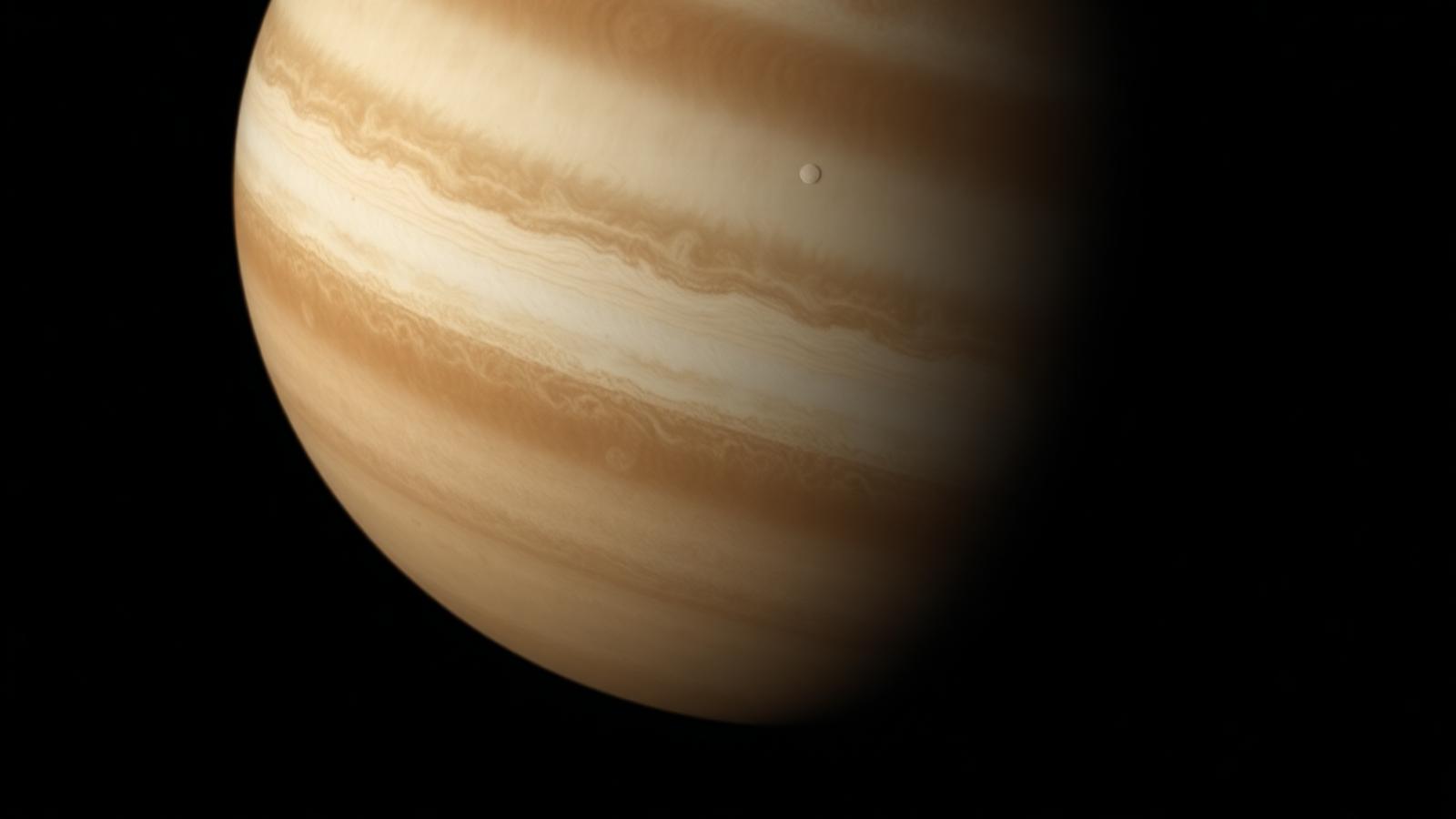
Jupiter is the second-brightest planet, usually around magnitude −2 to −2.9. It has a pale cream colour and shines with a very steady light. Unlike Venus, Jupiter can be visible anywhere along the ecliptic and can be up all night when in opposition. With any pair of binoculars you can see up to four bright "stars" strung out in a line either side of Jupiter — the Galilean moons Io, Europa, Ganymede and Callisto. Their positions change from night to night; you can watch them orbit in real time over a week.
Mars is unmistakable when bright and near opposition — a distinctly orange-red light, brighter than most stars. Between oppositions (roughly every 26 months) it dims to average brightness and becomes harder to pick out. Mars's colour is a genuine reddish hue caused by iron oxide dust on its surface, and it holds up even to the naked eye. If you see a moderately bright reddish "star" on the ecliptic, and it doesn't twinkle, it's Mars.
Saturn is a bit dimmer, roughly magnitude 0 to +1 depending on where it is in its orbit and how open its rings appear. It has a pale yellow colour and shines steadily like a good star. To the naked eye it just looks like a moderately bright star; the rings only become visible with a small telescope at 30× or more. Still, knowing that steady yellow point is Saturn — a gas giant with rings, moons, and a decade's worth of data from the Cassini mission — makes the sky feel very different.
Mercury is the hardest of the naked-eye planets, not because it's dim (it's actually quite bright at times) but because it orbits so close to the Sun that it's only visible for short "elongation" windows lasting a couple of weeks, low in twilight. You need a clear horizon and to know exactly when to look. SnapCosmos flags Mercury's best evening and morning apparitions from your location.
Conjunctions and lineups
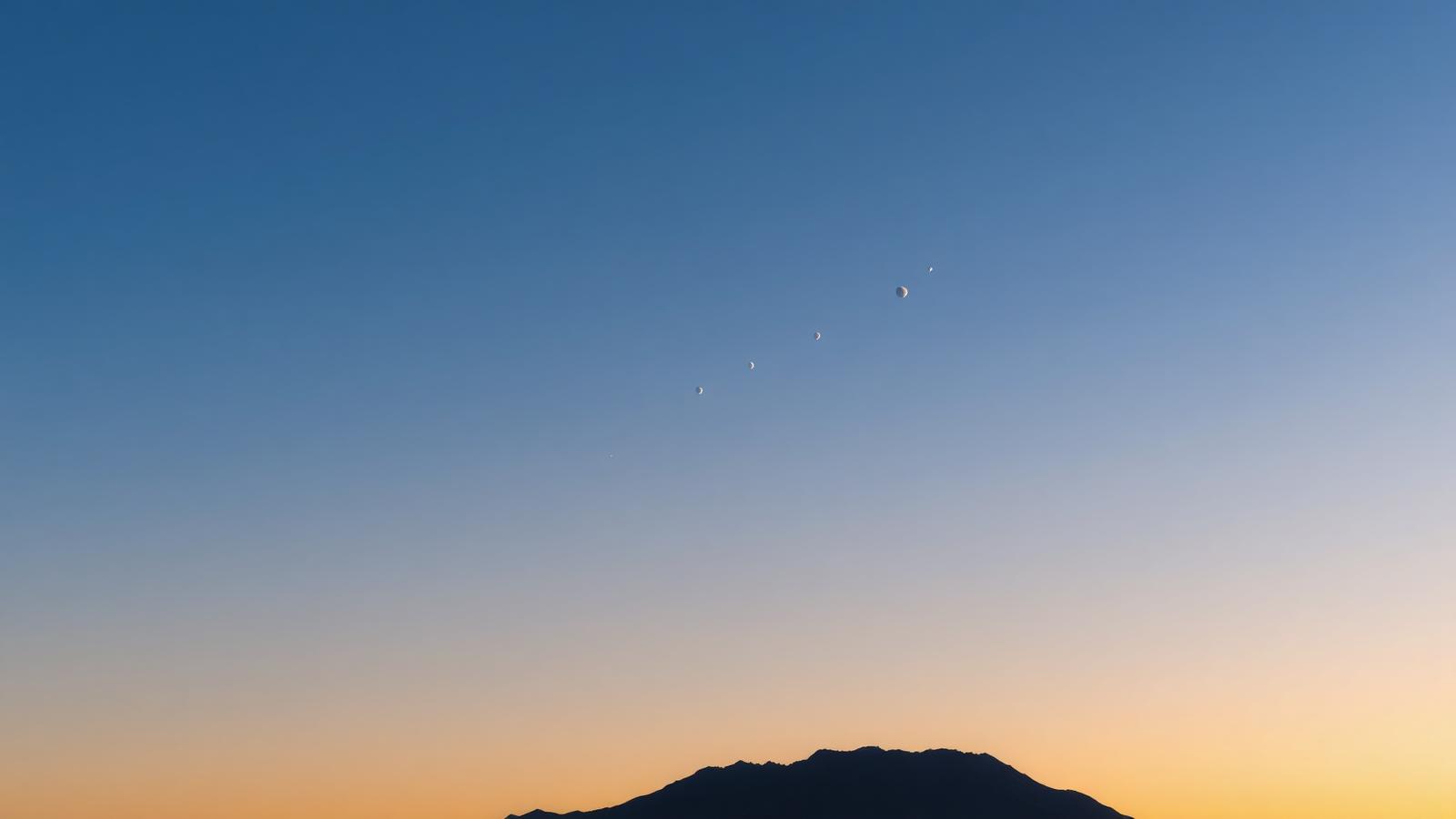
Because all the planets travel along the same ecliptic, they sometimes bunch up in the same part of the sky. A "conjunction" is when two planets appear within a small angle of each other — sometimes less than a full-Moon width, close enough to fit in the same binocular field. The most spectacular of the recent past was the Jupiter–Saturn conjunction of December 2020, when the two gas giants appeared closer than they had in 397 years.
Multi-planet lineups happen once or twice a year and are worth planning for. Any given month, SnapCosmos's Planets tonight page shows which planets are visible from your latitude, how bright they are, and whether any interesting conjunctions are coming up.
The takeaway trick
If you're outside now, look up. Pick the brightest "star." If it's dead calm and steady, it's probably a planet. Now check: is it near the arc where the Sun and Moon travel? If yes, it's very likely a planet. If it's white and dazzling low in the west after sunset, it's Venus. If it's cream and steady high overhead, it's Jupiter. If it's reddish and moderately bright on the ecliptic, it's Mars. If it's yellow and calm on the ecliptic, it's Saturn.
That five-minute mental checklist is what separates casual sky-lookers from people who actually know what they're seeing. Try it on the next clear night.
Editorial note
Quantitative claims on this page — dates, magnitudes, distances, times — are based on primary sources (NASA/JPL, NOAA SWPC, ESA, IAU, or peer-reviewed literature). Where relevant they're linked inline so you can check them yourself. Spot a mistake? Email snapcosmosplus@gmail.com and we'll correct it. See the editorial policy for sourcing and corrections.
Keep reading
Beginner · 8 min
How to spot the International Space Station from your backyard
The ISS is the third-brightest object in the sky after the Sun and Moon. Here's how to catch a pass tonight — no telescope required.
Beginner · 8 min
Dark-adapt your eyes for real stargazing
Your eyes need 20–30 minutes of true darkness to unlock the faint sky. Here's the biology, the habits, and the mistakes that reset it.
Guides · 11 min
How to see the Milky Way with your own eyes
A practical, field-tested guide to spotting our galaxy — where to go, when to look, and how to actually see the galactic core with the naked eye.