Dark-adapt your eyes for real stargazing
Your eyes need 20–30 minutes of true darkness to unlock the faint sky. Here's the biology, the habits, and the mistakes that reset it.
The single most valuable piece of astronomy equipment you already own is your retina. On a truly dark night, a fully dark-adapted human eye can detect single photons — the smallest possible packet of light. It can pick out stars a thousand times fainter than what you see when you first walk outside. But dark adaptation is fragile: it takes twenty to thirty minutes to build and can be destroyed in a single second by a phone screen at full brightness. Understanding how it works, and building the habits that protect it, is what separates someone who says "the sky doesn't look like the photos" from someone who says "I had no idea there were so many stars."
This is a short, practical guide to the biology of night vision, the specific mistakes that ruin it, and the small rituals that unlock the deep sky.
Rods, cones, and why dark adaptation exists
The human retina has two kinds of light-sensitive cells: rods and cones.
Cones are packed into the centre of your retina (the fovea) and are responsible for daytime vision, colour perception and fine detail. They come in three sensitivity types (red, green, blue) and give us our high-resolution colour image of the world. Cones are extremely useful in daylight and nearly useless in the dark — their sensitivity is low.
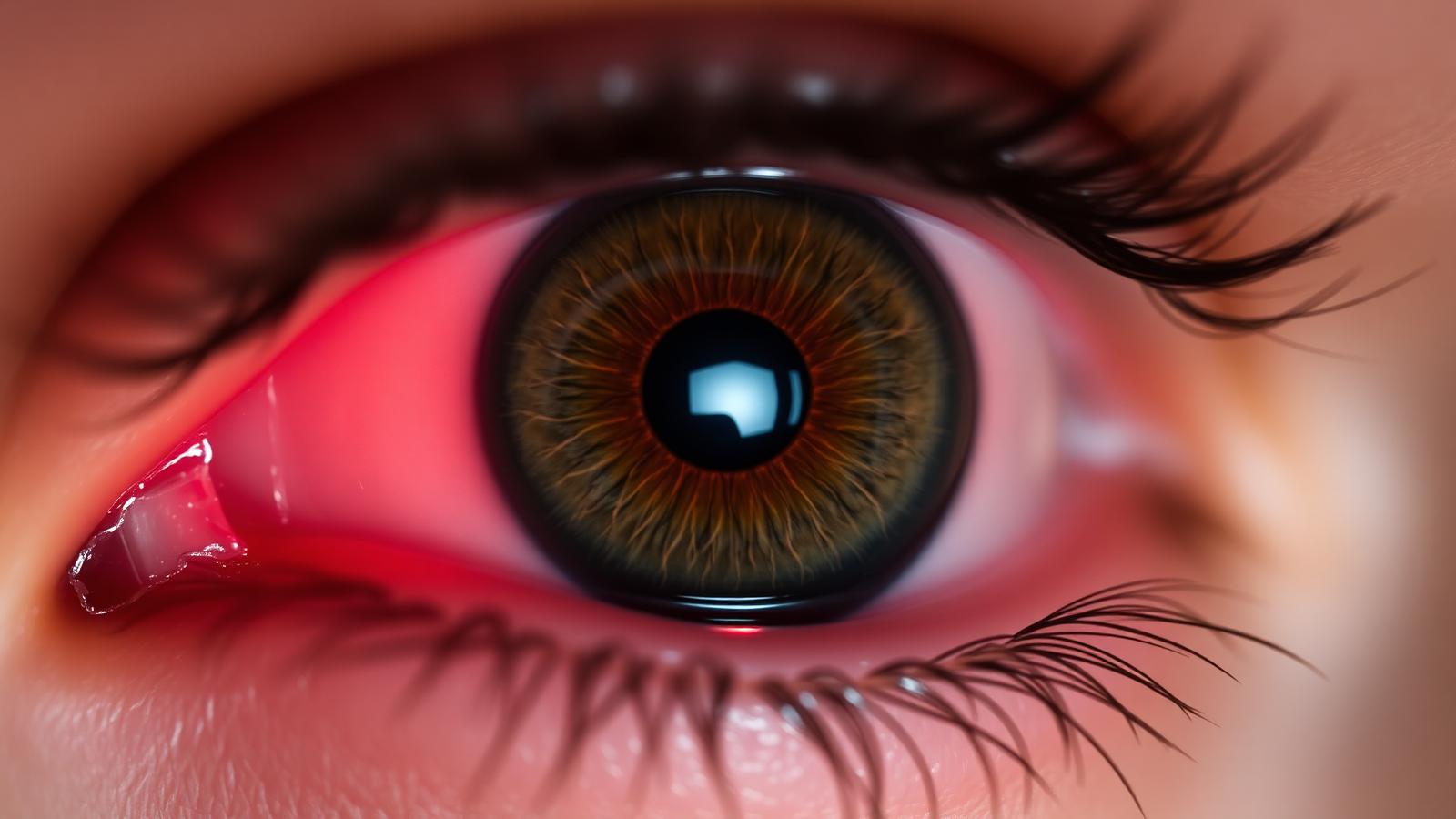
Rods are spread across the peripheral retina, and there are roughly 20 times more of them than cones. They contain a pigment called rhodopsin ("visual purple") that is fantastically sensitive to dim light — thousands of times more sensitive than cone pigments. But rhodopsin gets bleached and destroyed by bright light and needs time to regenerate chemically. This is dark adaptation.
The process happens in two stages. In the first 5–10 minutes your cones adapt as best they can, and you regain roughly the light sensitivity you had before you stepped outside. Then rhodopsin production ramps up and your rods take over. Between 15 and 30 minutes after entering darkness, you gain another factor of 100–1000 in sensitivity. After about 30 minutes, most of the adaptation is complete; after 45 minutes it's maxed out.
Any white or blue-white light bright enough to see by will bleach rhodopsin in seconds and dump your rods back to their starting sensitivity. Twenty minutes of work destroyed in one glance.
The three habits that protect adaptation
The single most important habit is to keep phones on a deep red screen mode after sunset. Both iOS and Android have this under Accessibility settings — search for "colour filters" or "colour tint" and choose the red preset. Combined with brightness at 20–30%, this lets you check the time or a chart without resetting your rods. Warm night-mode filters (yellow-orange) help a bit but not much; you want deep monochromatic red for full protection.
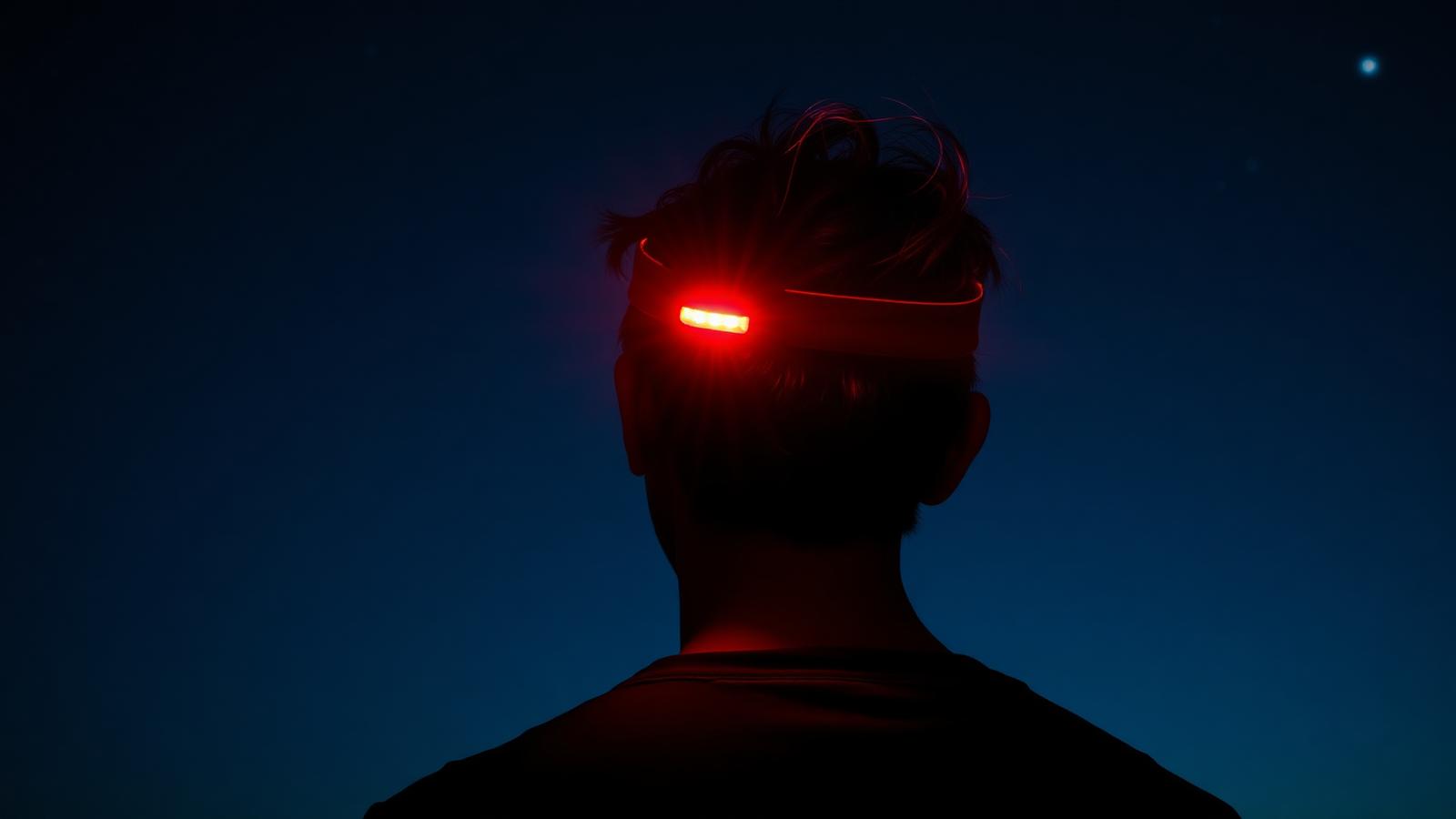
The second habit is to use red light for anything else you need to see: a red-LED headlamp for setting up gear, a red filter over a torch for reading star charts. Astronomy-specific headlamps (Petzl Tikkina RED, Coast HL series, Black Diamond Storm with red mode) have a dedicated red channel that never activates the white LEDs by accident. If someone shows up with a white headlamp, ask them nicely to switch to red or turn it off.
The third habit is to protect one eye when white light is unavoidable. Car headlights arriving at your site, someone opening a house door — close one eye tight for the duration of the exposure. That eye stays dark-adapted. Once the light source is gone, close the ruined eye and open the good one; you'll still see faint stars while the bleached eye recovers.
Averted vision: seeing what you can't see
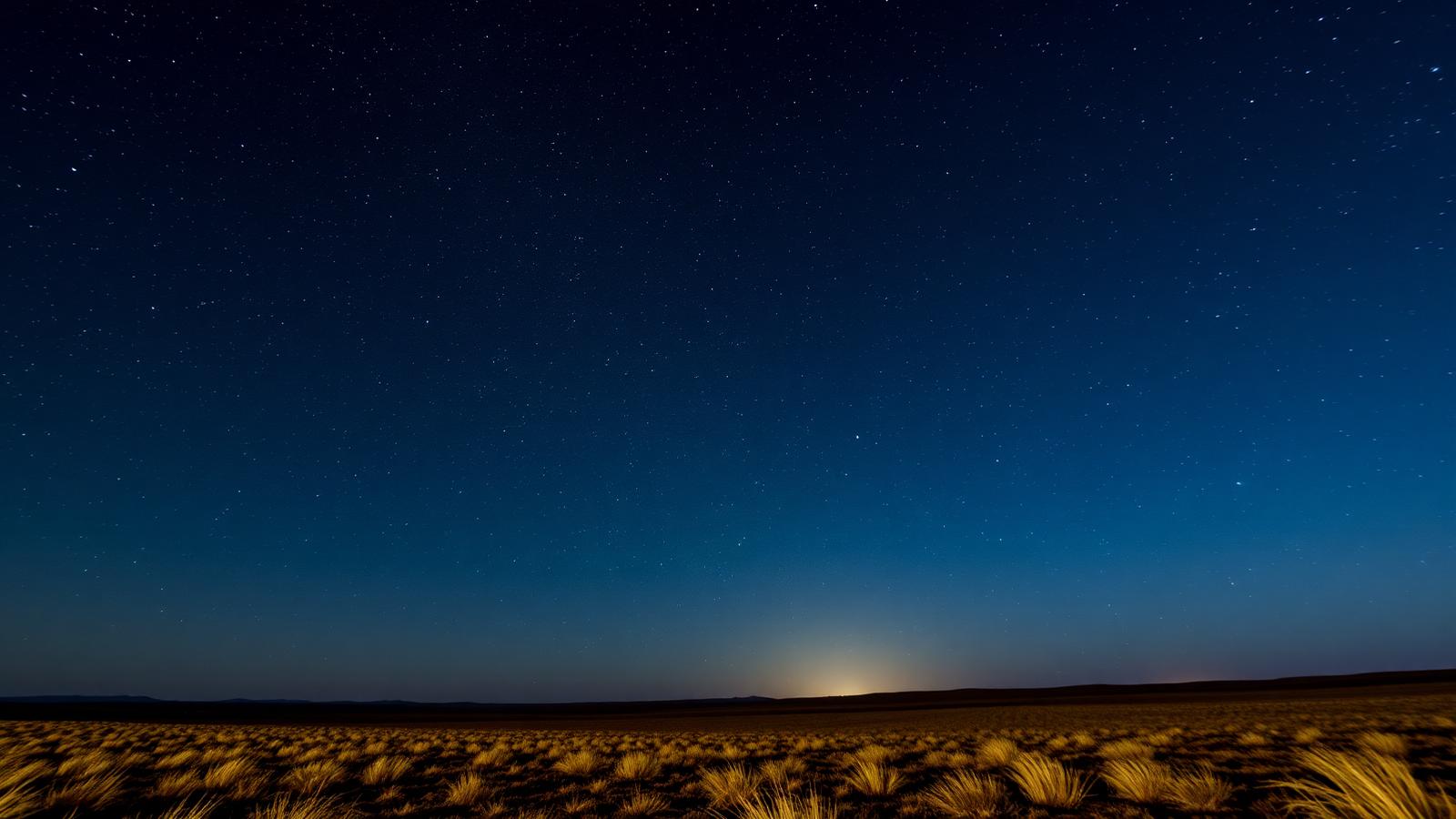
Once you're dark-adapted, there's a technique that lets you see even fainter objects: averted vision. Because the fovea (dead centre of your visual field) is dominated by cones, it's actually less sensitive to faint light than the surrounding retina. If you stare directly at a very faint galaxy or nebula, you often see nothing. Look 10–15° off to the side and the object suddenly appears in your peripheral vision.
The trick takes practice. Look at where you know the object is, but keep your attention on the space slightly off to one side. Faint objects "pop in" and "pop out" as you shift your gaze — a good sign that you're using averted vision correctly. Move your eye slowly; the peripheral retina is more sensitive to motion than to static objects and a small side-to-side glance can bring a very faint smudge into view.
Deep-sky observers have used averted vision for over a century. Charles Messier's original 18th-century catalogue of "not-comets" (now the famous Messier list) was compiled largely with averted vision through modest refractors. The technique is why an experienced amateur with a 6-inch telescope can see objects a beginner misses with a 12-inch scope.
Nutrition, hydration, and other small edges
This is where astronomy folklore starts to blend with science. A few things are actually documented:
Vitamin A is genuinely important for rhodopsin production, and long-term deficiency causes night blindness. Short-term supplementation before an observing session doesn't help unless you're already deficient — a normal diet gives you what you need.
Caffeine constricts blood vessels slightly and can marginally reduce visual sensitivity for some people. A pre-observation coffee probably doesn't matter, but heavy caffeine right before critical observations might.
Hyperventilation (deep, rapid breathing) briefly increases blood oxygen, and some visual observers swear it helps them push to fainter magnitudes. The effect is real but tiny; it's mostly a placebo for gear-obsessed observers.
Cold reduces retinal blood flow and slightly degrades night vision, but only significantly if you're actually shivering. Dress warmly and don't worry about it further.
Alcohol impairs low-light vision measurably. If you're serious about faint deep-sky work, don't drink before an observing session.
Sleep matters more than any of the above. A well-rested observer at midnight will see fainter stars than a tired one at 10 p.m. If you can nap before a big session, do.
Real-world sequence: how to prepare for a session
Here's the pre-observing routine used by experienced deep-sky observers, distilled into a checklist.
Ninety minutes before dark: eat a proper meal, hydrate, avoid heavy caffeine.
Sunset: arrive at your site (or set up in the garden). Set up gear while there's still light — nothing wrecks a session like fumbling with a tripod in the dark.
Deep twilight (Sun 6°–12° below horizon): switch phone to red screen, dim to 20%. Wear an eye patch or start closing one eye whenever indoor lights appear. Begin to think in terms of "protecting the rods."
Astronomical twilight ends (Sun 18° below horizon): the sky is now as dark as it will get. This is when your dark adaptation completes. From this point, treat every white light as an emergency.
Session end: give yourself a few minutes with headlamp on red before switching to white light for packing up. Sudden bright light on fully dark-adapted eyes is briefly painful.
Once you experience a properly dark-adapted view of the sky, you understand why people bother driving hours to a dark site. Ten thousand stars, the Milky Way with structure, faint galaxies you can just barely see with averted vision — none of this is available to eyes still adapted to a phone screen. The gear is your retina. Protect it, and the sky opens up.
Editorial note
Quantitative claims on this page — dates, magnitudes, distances, times — are based on primary sources (NASA/JPL, NOAA SWPC, ESA, IAU, or peer-reviewed literature). Where relevant they're linked inline so you can check them yourself. Spot a mistake? Email snapcosmosplus@gmail.com and we'll correct it. See the editorial policy for sourcing and corrections.
Keep reading
Beginner · 8 min
How to spot the International Space Station from your backyard
The ISS is the third-brightest object in the sky after the Sun and Moon. Here's how to catch a pass tonight — no telescope required.
Beginner · 8 min
How to tell planets from stars with the naked eye
Two simple tests separate wanderers from fixed stars — plus how to identify Venus, Jupiter, Mars and Saturn without a chart.
Guides · 11 min
How to see the Milky Way with your own eyes
A practical, field-tested guide to spotting our galaxy — where to go, when to look, and how to actually see the galactic core with the naked eye.