How to see the Milky Way with your own eyes
A practical, field-tested guide to spotting our galaxy — where to go, when to look, and how to actually see the galactic core with the naked eye.
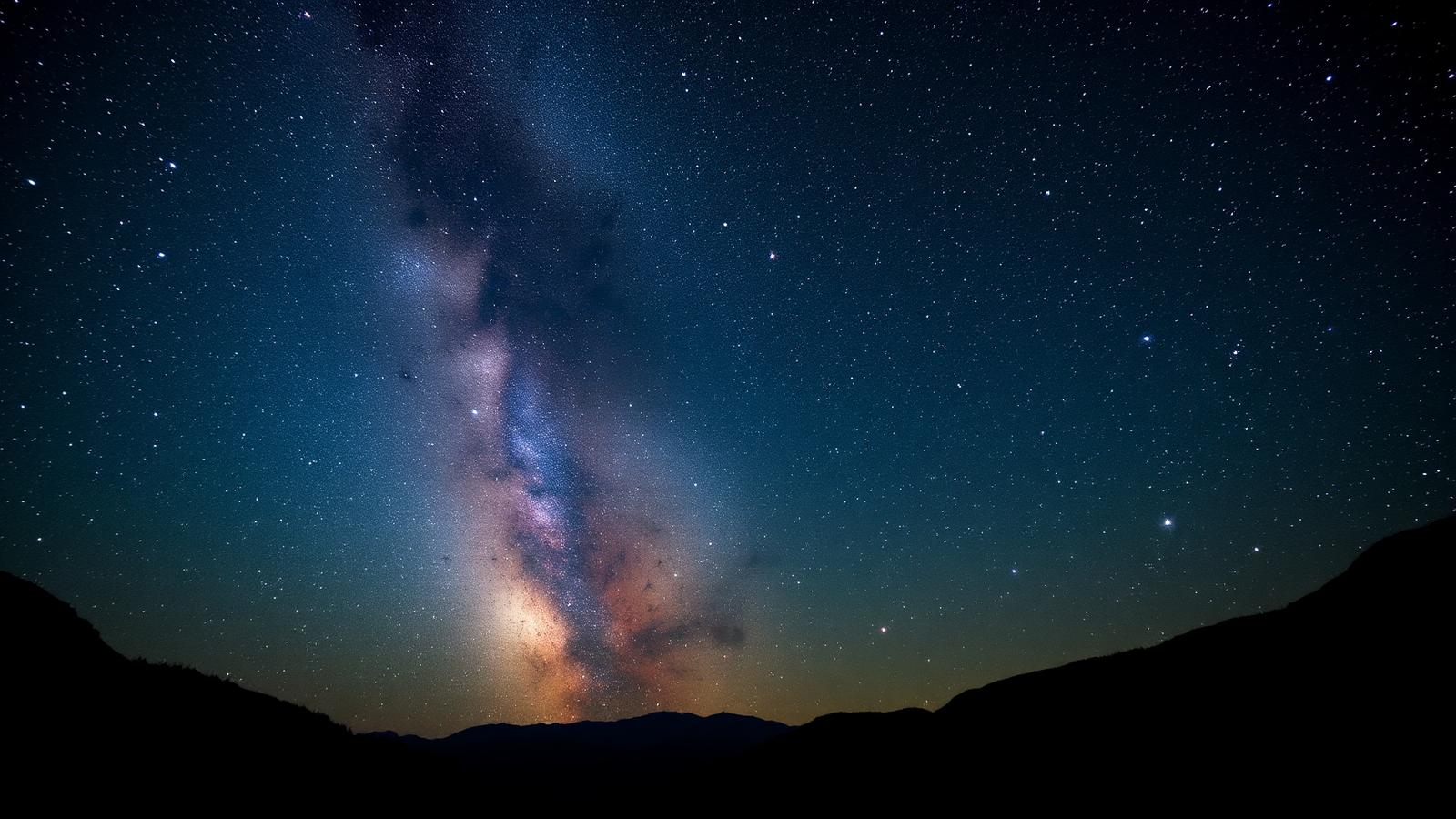
The Milky Way isn't a place you visit — it's the disc of stars we live inside, seen from within. Every "star" you've ever noticed in the sky is a neighbour in our own galaxy, and the pale band arching overhead on a dark night is the combined glow of roughly 100 billion more, stacked so deep they blur together. Seeing it with your own eyes is one of the most humbling things a human can do without a ticket or a passport. It's also easier than most people think — if you get three variables right.
This guide walks through those three variables (darkness, timing, direction), then covers the small habits that separate a disappointing "meh, is that it?" session from a "I can't believe I've never seen this" one. It assumes zero equipment: no telescope, no binoculars, no camera. Just your eyes, a warm jacket, and a willingness to drive an hour.
What you're actually looking at
The Milky Way is a barred spiral galaxy about 100,000 light-years across, and our Solar System sits roughly two-thirds of the way out from the centre. When you look up on a dark night and see the pale band, you're looking along the plane of the disc — a cross-section through our own galaxy's spiral arms. The brightest, most obvious part is the galactic core, a dense bulge of older stars in the direction of the constellation Sagittarius. From temperate latitudes it never rises very high, which is why the "core season" for northern-hemisphere observers is roughly April to September, when the core arcs above the southern horizon at some point in the night.
Away from the core, the band is still visible year-round from truly dark sites, and winter constellations like Orion, Auriga and Perseus contain gorgeous stretches of the outer disc. But if you've never seen the Milky Way before, aim for the summer months and target the core. It's the "wow" version.
The three variables that decide everything
There are only three factors that determine whether you'll see the Milky Way tonight. Get all three right and it's almost impossible to miss. Miss any one and it disappears.
The first is darkness. Light pollution is by far the biggest killer of the Milky Way. In a Bortle 8 city sky the galactic band is completely invisible; it doesn't matter how clear the air is or how good your eyes are. Even in Bortle 5 suburbs it's a faint smear, at best. You typically need Bortle 4 or darker — meaning a rural site 30–60 km from any large town — for the Milky Way to look like the postcards. Use lightpollutionmap.info to plan: aim for anywhere shaded blue or grey. The difference between Bortle 5 and Bortle 3 is not subtle; it's the difference between "I can just about see it" and "it casts a shadow."
The second is the Moon. A full Moon at zenith is only about 0.0003% as bright as the daytime Sun, but that's still hundreds of times brighter than the Milky Way's diffuse glow. Even a first quarter Moon overhead washes out the galactic band completely. Plan your session around the new-Moon window — the seven nights on either side of new Moon — or wait until after the Moon has set. A rising crescent that stays low on the horizon barely affects the sky and is fine to ignore.
The third is astronomical darkness. The Sun has to be at least 18° below the horizon before the sky is truly black. In summer at high latitudes (anywhere north of about 55°N) this never happens — the sky stays a deep blue all night long. Norway, Sweden, Finland, Scotland, Iceland and most of Canada lose their Milky Way season entirely between mid-May and late July for that reason. If you live somewhere with white nights, plan your Milky Way trips for late August, September, or April. SnapCosmos shows twilight windows for your exact location so you can see at a glance whether tonight even has real darkness.
The one-hour version: what to actually do tonight
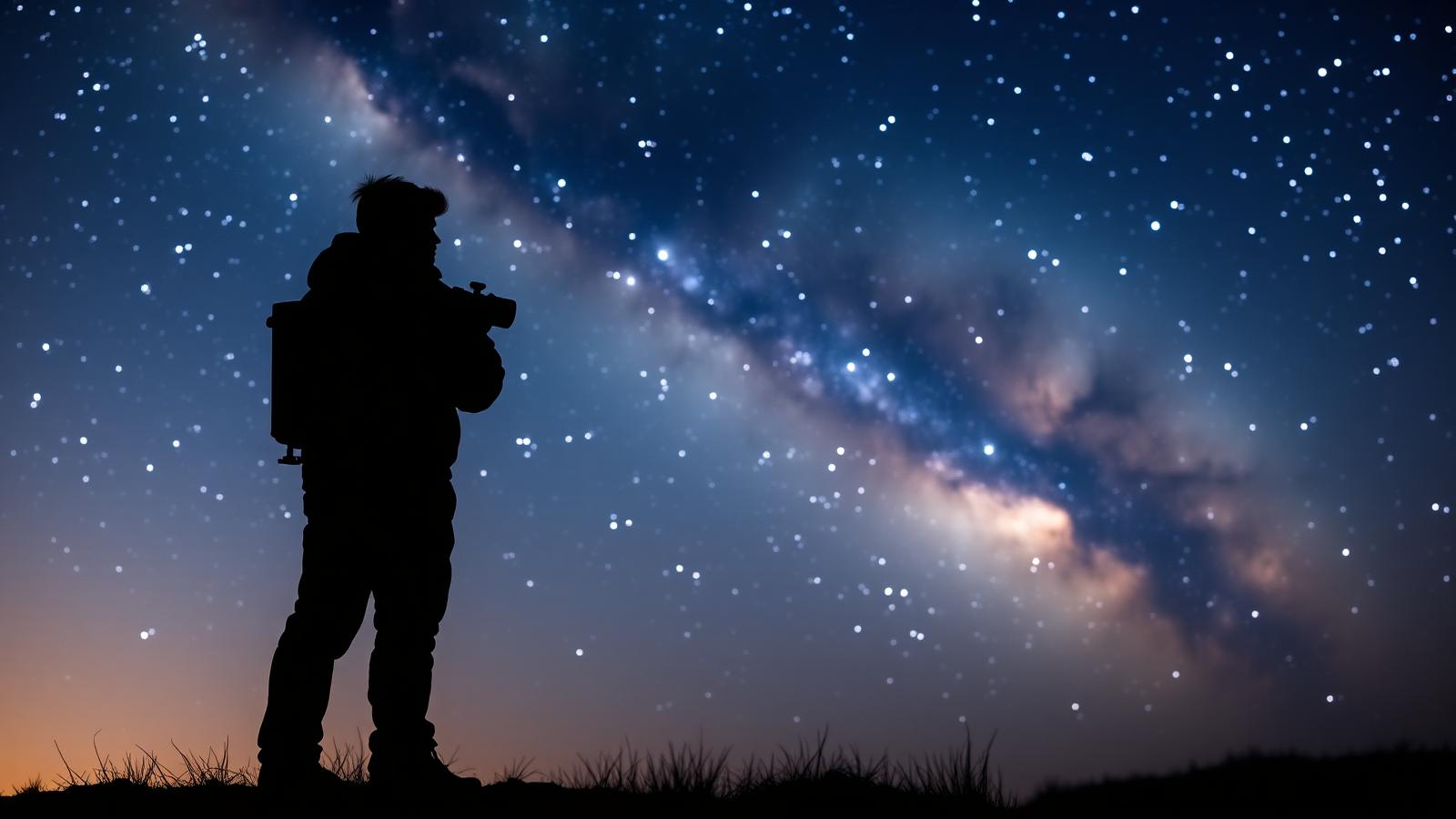
If you have those three variables lined up (dark site, no Moon, real astronomical darkness), here's the field routine that gives you the best possible view.
Arrive before sunset. Dark adaptation takes 20–30 minutes, and it's much easier when it happens gradually. Watching the sky darken from blue to indigo to black also gives you a much better mental map of where the Milky Way will appear.
Face south (in the northern hemisphere) between roughly midnight and 2 a.m. local time in June, or earlier in the evening as summer progresses. The galactic core rises in the southeast and sets in the southwest; at transit it's due south. The Summer Triangle (Vega, Deneb, Altair) is a foolproof pointer — the Milky Way runs straight through it.
Kill every white light. Phone screens on full brightness reset 20 minutes of adaptation in one glance. Use a red-screen mode (both iOS and Android have one under Accessibility) and turn the brightness all the way down. If someone shows up with car headlights, close one eye until they're off.
Use averted vision. The centre of your retina is packed with colour-sensitive cones; the sensitive night-vision rods are around the edge. Look about 10° off to the side of the Milky Way and it will suddenly become brighter and more detailed in your peripheral vision. This is not a trick — it's how deep-sky astronomers have observed for centuries.
Give it time. The Milky Way looks bland in the first minute and spectacular after twenty. Detail keeps unfolding: dark rifts, star clouds around Sagittarius and Cygnus, the "Great Rift" splitting the band lengthwise. Bring a folding chair; craning your neck ruins the session faster than anything else.
Common mistakes and how to avoid them
The single most common mistake is driving to a "dark" spot that isn't dark. A rural road half an hour outside a city is often still Bortle 6 or 7, especially in the direction of the city itself. Check a light-pollution map before you go, and drive perpendicular to the nearest city glow, not along its edge.
The second most common mistake is planning around clear skies without checking the Moon. It's astonishing how often people drive two hours to a dark site, get a perfectly clear night, and see nothing because the Moon is 80% illuminated and directly overhead. The Moon phase matters more than a few thin clouds; a hazy new-Moon night beats a crystal-clear full-Moon night every time.
A subtler mistake is looking too early. In June at 50°N, "sunset" is 21:30 but astronomical darkness doesn't start until well after 23:30 — and the core doesn't reach a useful altitude until after midnight. If you look before midnight in early summer you'll see a smudge and go home disappointed. Use SnapCosmos's twilight and Milky Way pages together to find the actual window when both are dark.
Finally, don't chase clouds. Thin high cirrus you can barely see in daylight will ruin transparency at night. If the sky isn't visibly clean, wait. One perfect night beats five compromised ones.
Southern hemisphere: bonus rounds
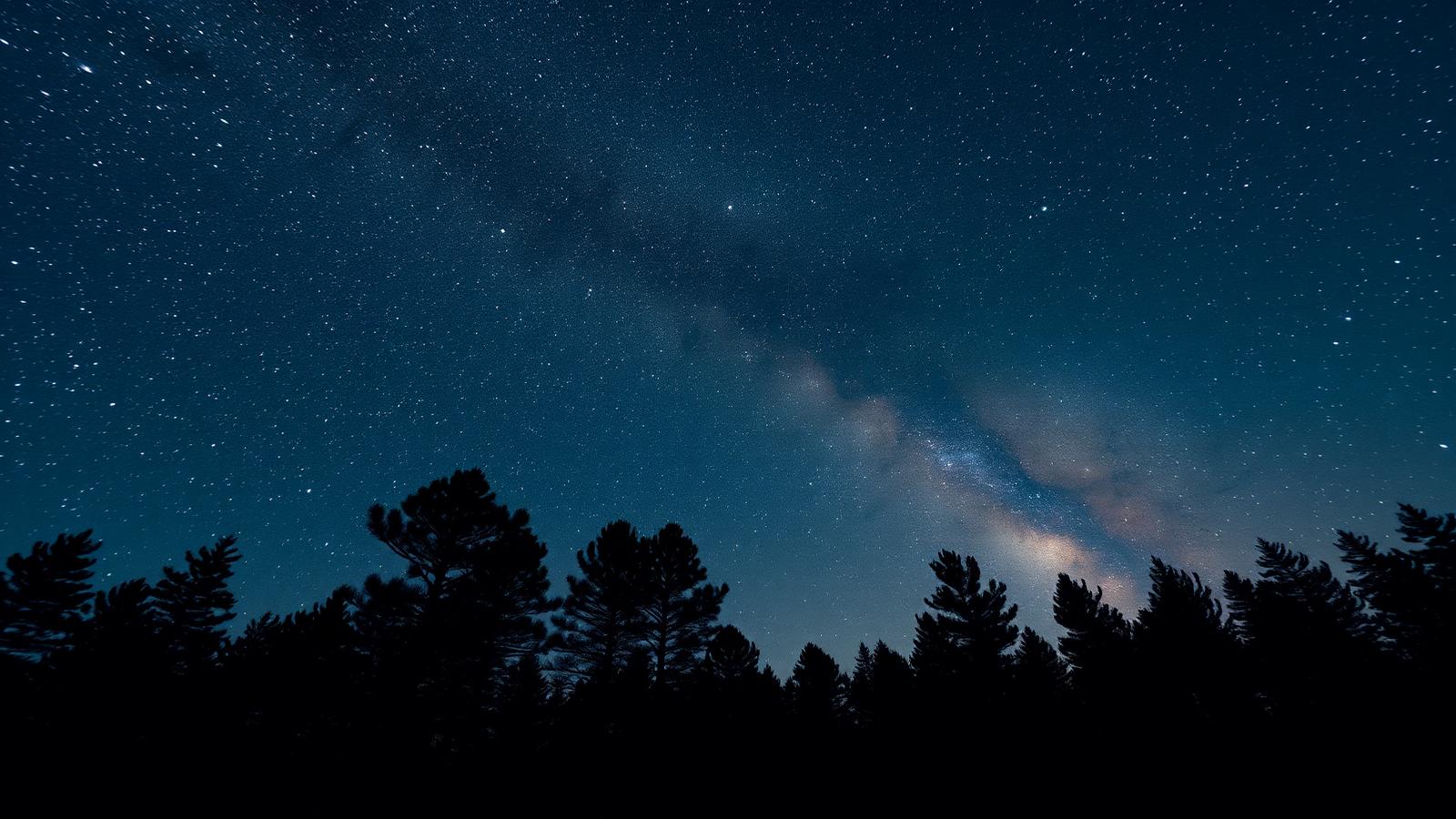
Observers in Australia, New Zealand, South America and southern Africa get an unfair advantage. The galactic core passes almost directly overhead, so it's much brighter and more detailed than any northern view. It also stays up for most of the night. If you're travelling to the southern hemisphere, prioritise a dark-sky trip — anywhere in the Atacama Desert, the New Zealand South Island, or outback Australia — and you'll see the Milky Way in a way that no one at 50°N ever will.
The Small and Large Magellanic Clouds are also visible only from the southern hemisphere. They're two dwarf galaxies orbiting our own, and they look like detached patches of Milky Way sitting on their own. Once you've seen them naked-eye, no astronomy poster can quite compete.
What to look for once you can see the band
Once you can trace the Milky Way from horizon to horizon, the fun starts. Around the constellation Sagittarius, look for the dark "Prancing Horse" nebula and the bright Lagoon Nebula, both visible without optical aid from a good site. In Cygnus (near the star Deneb), the North America Nebula is a naked-eye smudge on very transparent nights. The double cluster in Perseus, the Andromeda Galaxy (yes, another galaxy entirely — 2.5 million light-years away, visible naked-eye), and the Pleiades all sit near the band and reward the effort.
For a next step, bring a pair of 10×50 binoculars (see our guide to first astronomy binoculars). The Milky Way through binoculars is a completely different experience — thousands of stars pop out of the diffuse glow, and star clusters explode into resolvable points. But you don't need them for your first session. Your eyes are enough.
The Milky Way has been visible to every human who ever lived, until roughly a hundred years ago. Modern city dwellers are the first generation in the history of our species to grow up not knowing what it looks like. That's a strange and recent thing. If you've never seen it, one drive and one good night will fix it — and you'll understand why every culture on Earth built stories around that pale band across the sky.
Editorial note
Quantitative claims on this page — dates, magnitudes, distances, times — are based on primary sources (NASA/JPL, NOAA SWPC, ESA, IAU, or peer-reviewed literature). Where relevant they're linked inline so you can check them yourself. Spot a mistake? Email snapcosmosplus@gmail.com and we'll correct it. See the editorial policy for sourcing and corrections.
Keep reading
Guides · 10 min
Your first pair of astronomy binoculars: what to buy and what to skip
Skip the telescope. A good pair of 10×50 binoculars will show you more, faster — and here's exactly what to look for and where to point them.
Explainers · 9 min
Moon phases, simply explained (and why they're not Earth's shadow)
Why the Moon changes shape night after night, what a supermoon really is, and how to remember which phase is waxing, waning, gibbous or crescent.
Beginner · 8 min
How to spot the International Space Station from your backyard
The ISS is the third-brightest object in the sky after the Sun and Moon. Here's how to catch a pass tonight — no telescope required.