The Bortle scale: how dark is your sky, really?
The 1–9 scale astronomers use to describe night-sky darkness, what you can see at each level, and how far you need to drive to escape city light.
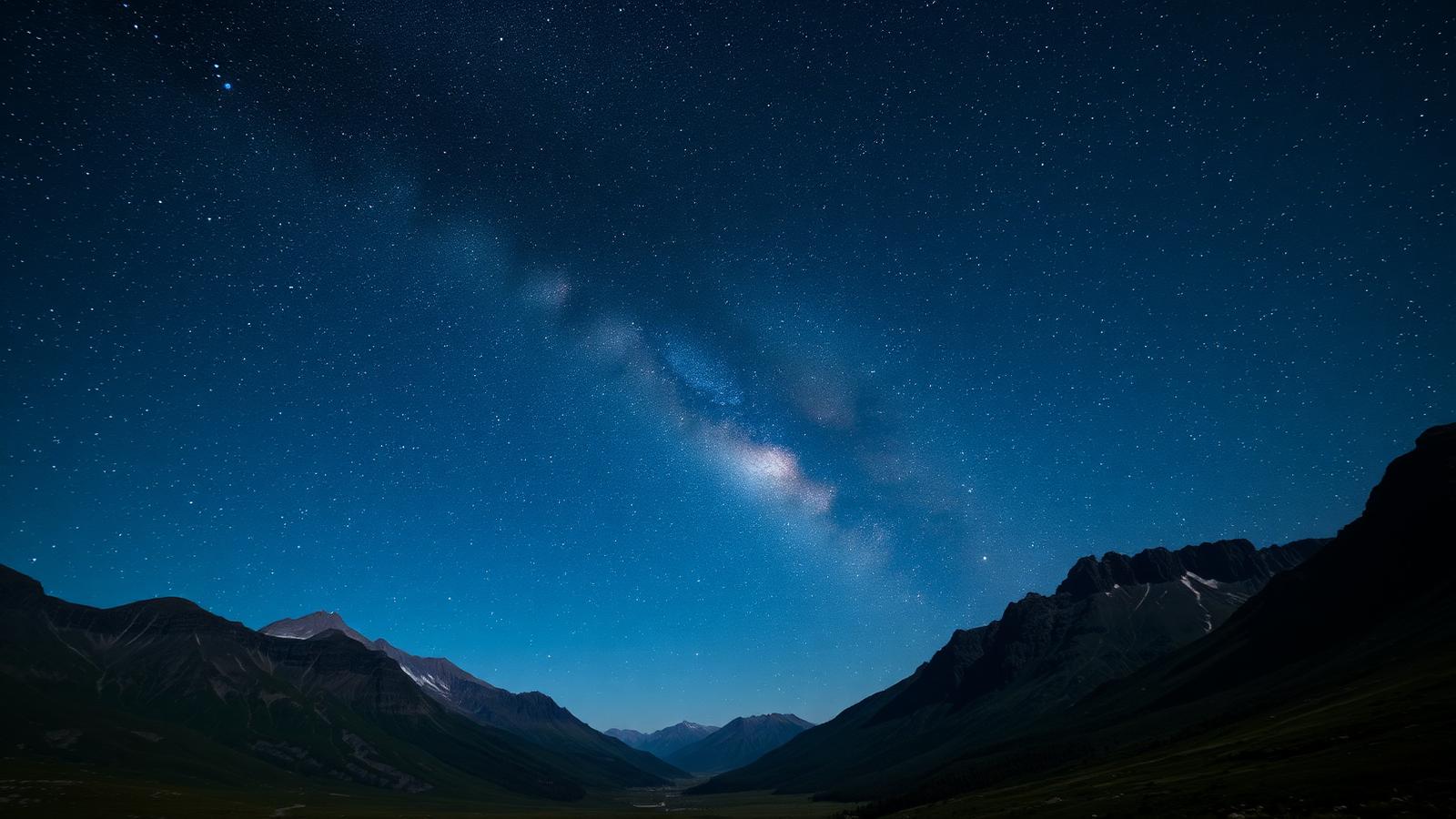
Roughly 80% of the world's population lives under a sky bright enough to hide the Milky Way. That's not a poetic exaggeration — it's a measurement, from the 2016 New World Atlas of Artificial Night Sky Brightness. Whole generations of city-born people have grown up never seeing our own galaxy. Understanding the scale that astronomers use to describe this — the Bortle Dark-Sky Scale — is the first step in fixing it, either by driving somewhere darker or by shielding your own local lights.
This is a plain-English tour of the Bortle scale, what you can actually see at each level, how to figure out your own class without any instruments, and why driving one or two Bortle classes darker is worth much more than buying a bigger telescope.
Where the Bortle scale came from
The scale was created in 2001 by American amateur astronomer John E. Bortle, published in Sky & Telescope magazine, to give visual observers a shared vocabulary for sky darkness. It runs from 1 (pristine wilderness sky, the darkest possible on Earth) to 9 (inner-city sky). Each level is defined by a combination of naked-eye limiting magnitude, whether the Milky Way is visible and in what detail, whether zodiacal light and gegenschein are visible, the colour of the horizon, and how much of the sky is "wasted" by artificial glow.
It's a subjective scale — a trained observer standing next to a light-pollution meter is still the most reliable way to classify a site — but it maps well enough to instrument measurements that it's become the standard. A rough correspondence: Bortle 1 corresponds to about 21.9 mag/arcsec² on a Sky Quality Meter (SQM); Bortle 4 is around 21.0; Bortle 6 is around 19.5; Bortle 8 is 18.0 or brighter.
The nine classes, in plain language
Class 1: Pristine wilderness. The Milky Way casts diffuse shadows on white surfaces. Zodiacal light and gegenschein are obvious. Faint airglow and the pale glow of M33 (the Triangulum Galaxy) are naked-eye. Sirius sometimes casts a visible shadow. Sites like the Atacama Desert, remote parts of the Namibian desert, and the darkest US National Parks reach this level. Almost no European sites qualify anymore.
Class 2: Truly dark. Milky Way structure is stunning, dark rifts obvious, M33 is direct-vision naked-eye. Zodiacal light is bright and colourful. Airglow may be seen as a subtle glow near the horizon. Most designated International Dark Sky Reserves are Bortle 1–2.
Class 3: Rural. The Milky Way still has plenty of structure, especially near the galactic centre. Zodiacal light is easily visible. M31 (the Andromeda Galaxy) is impressive. Some light domes visible near the horizon in the direction of distant towns.
Class 4: Rural / suburban transition. The Milky Way is still clearly visible overhead but detail is muted. Zodiacal light is visible but pale. Light domes cover a noticeable portion of the horizon. Fine deep-sky work is still very productive here.
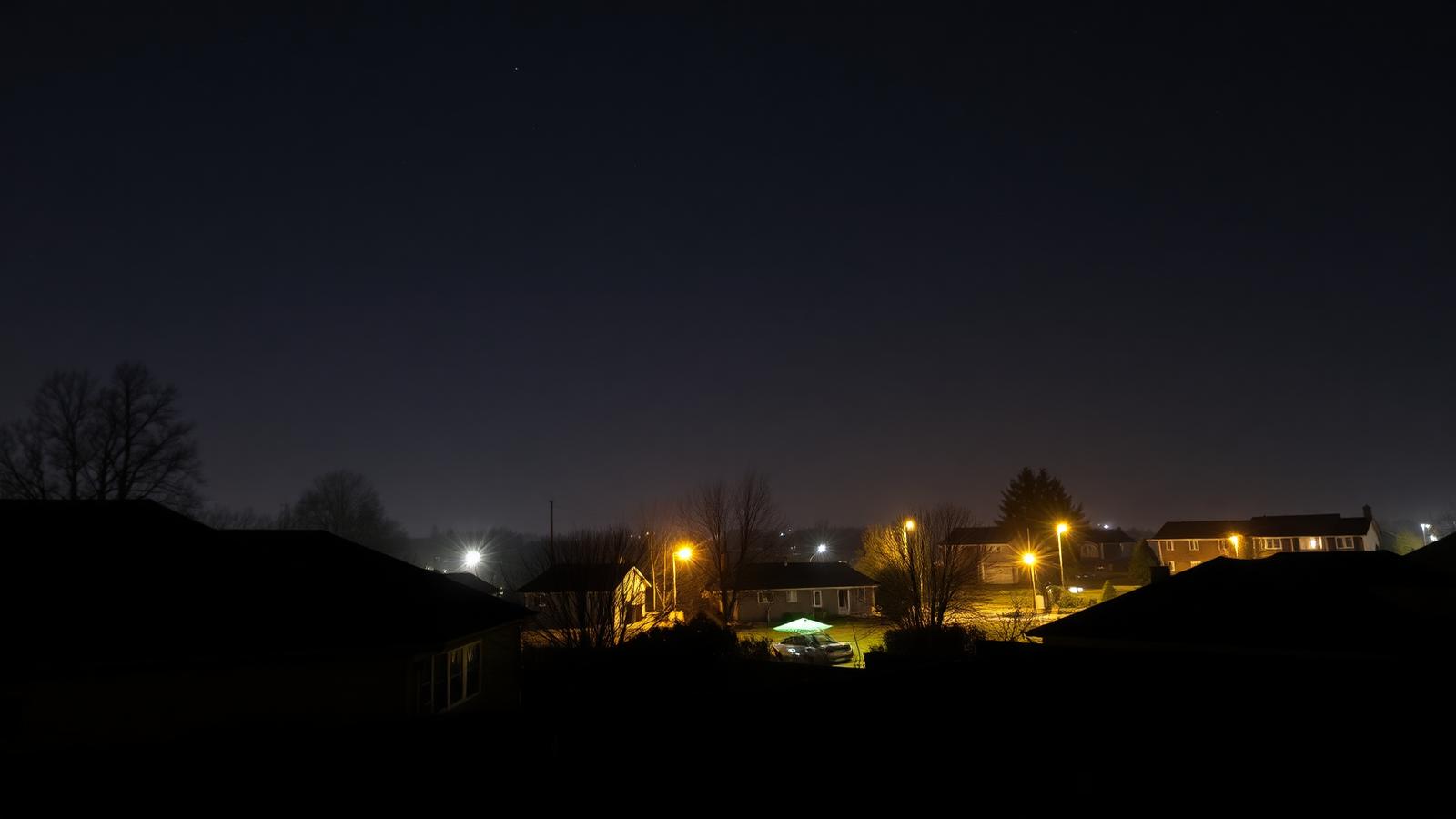
Class 5: Suburban. The Milky Way is faint and washed out, especially away from the galactic centre. Zodiacal light is barely detectable in the very best conditions. Clouds appear brighter than the sky (a hallmark of light pollution). This is the level of most large-town suburbs.
Class 6: Bright suburban. The Milky Way is invisible or only visible near the zenith on the best nights. Clouds are noticeably illuminated from below. M31 is a faint smudge; most deep-sky objects require the telescope you didn't want to have to buy.
Class 7: Suburban / urban transition. Sky is greyish or brownish. No hint of Milky Way. Only the brightest constellations are recognisable. This is typical of the edges of a large city.
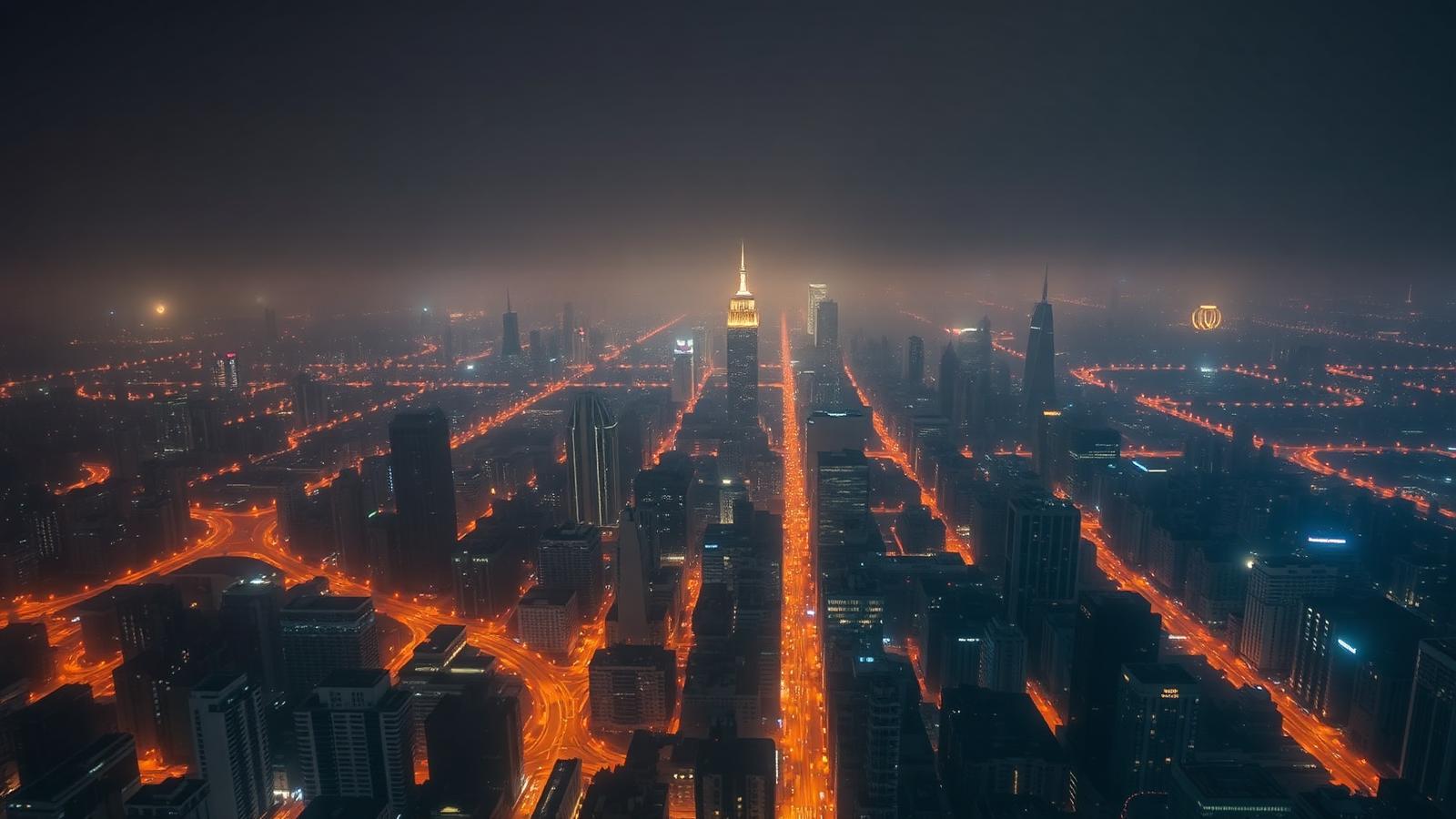
Class 8: City. Sky bright enough to read a newspaper by. Only major stars are visible; constellation shapes are hard to trace. Even the Moon looks washed out.
Class 9: Inner city. Sky is bright orange or grey. Only the Moon, planets, and a handful of the brightest stars are visible. Manhattan, central Tokyo, central London.
How to figure out your Bortle class without a meter
Two methods, no equipment required.
The Milky Way test. Wait until the galactic core is well above the horizon (summer, from a northern latitude, around 1 a.m.). Look south. If you can see the Milky Way at all, you're Bortle 6 or better. If you can see distinct structure in it (dark rifts, star clouds), you're Bortle 4 or better. If it casts diffuse shadows on a white sheet, you're Bortle 2 or better. This test alone will place you within one class in most cases.
The limiting magnitude test. Find a familiar constellation and count how many stars you can see. Bortle 3 gives you naked-eye down to about magnitude 6.7. Bortle 5 gives you about 5.5. Bortle 8 gives you about 3.5. The excellent free chart at telescopeguide.org lets you match your view against reference charts.
For an objective number, download the free "Sky Quality Meter" app on iOS or Android — it uses your phone's light sensor and gives an SQM reading that maps to Bortle. Or use the light-pollution atlas at lightpollutionmap.info, which shows your site's SQM based on satellite measurements. Both are more consistent than eyeballing.
The one-hour rule: how far you need to drive
The single most important fact about light pollution is that its impact drops off with the square of distance from the source. Doubling your distance from a city cuts its contribution to your local sky brightness by a factor of four. Tripling it cuts it by a factor of nine.
In practical terms, this means a one-hour drive perpendicular to your nearest large city almost always drops you two Bortle classes — from Bortle 7 to Bortle 5, or Bortle 6 to Bortle 4. A two-hour drive can drop you three classes. A half-hour drive to the "countryside" often doesn't help much, because you're still within the halo of local towns.
The direction of your drive matters enormously. Driving away from the largest city and toward the smallest population helps most. Driving to a "dark" spot that's actually between two mid-sized towns is a common trap. Always check a light-pollution atlas before you leave.
Why one class darker beats a bigger telescope
For every one-class improvement in the Bortle scale, faint deep-sky objects become roughly 2.5 times easier to see. That's about the same benefit as upgrading from an 8-inch telescope to a 12-inch, or from a 12-inch to an 18-inch. A person with a 4-inch refractor at Bortle 3 will see more nebulosity in the North America Nebula than someone with a 12-inch Dobsonian at Bortle 7. Light pollution is the great equaliser: no amount of aperture rescues you from a bad sky.
This is why serious deep-sky observers plan their sessions around dark sites and Moon phase, not around gear. A modest binocular or scope, plus one dark night per month, produces far more memorable observations than a giant scope from suburbia every clear night.
Fighting light pollution locally
You can also improve the situation without moving. Most residential light pollution comes from three sources: unshielded outdoor fixtures, over-bright security lighting, and blue-rich LED streetlights. Simple fixes make a real difference:
Replace any bare bulb over a doorway with a full-cutoff fixture that directs light only downward. Modern shielded fixtures cost the same as unshielded ones and last longer.
Choose warm-white LEDs (2700K or lower) instead of cool-white (4000K+). Warm LEDs scatter far less in the atmosphere and are gentler on human circadian rhythms and wildlife.
Use motion-activated security lights instead of dusk-to-dawn floods. They work better at their actual job and pollute far less.
Advocate for shielded, warm-temperature streetlights in your community. Many cities have converted to bright blue LEDs in the last decade and are only just starting to reverse the decision as they realise they've created public-safety and ecological problems as well as astronomical ones.
The International Dark-Sky Association (darksky.org) has certified over 200 places worldwide as Dark Sky Reserves, Parks, Sanctuaries or Communities — places that have made specific commitments to protect the night sky. If you live near one, visit it once. If you don't, help push your local government toward the same standards. Every unshielded floodlight in your street is stealing stars from every child who might otherwise have grown up knowing them.
Editorial note
Quantitative claims on this page — dates, magnitudes, distances, times — are based on primary sources (NASA/JPL, NOAA SWPC, ESA, IAU, or peer-reviewed literature). Where relevant they're linked inline so you can check them yourself. Spot a mistake? Email snapcosmosplus@gmail.com and we'll correct it. See the editorial policy for sourcing and corrections.
Keep reading
Explainers · 9 min
Moon phases, simply explained (and why they're not Earth's shadow)
Why the Moon changes shape night after night, what a supermoon really is, and how to remember which phase is waxing, waning, gibbous or crescent.
Guides · 11 min
How to see the Milky Way with your own eyes
A practical, field-tested guide to spotting our galaxy — where to go, when to look, and how to actually see the galactic core with the naked eye.
Beginner · 8 min
How to spot the International Space Station from your backyard
The ISS is the third-brightest object in the sky after the Sun and Moon. Here's how to catch a pass tonight — no telescope required.