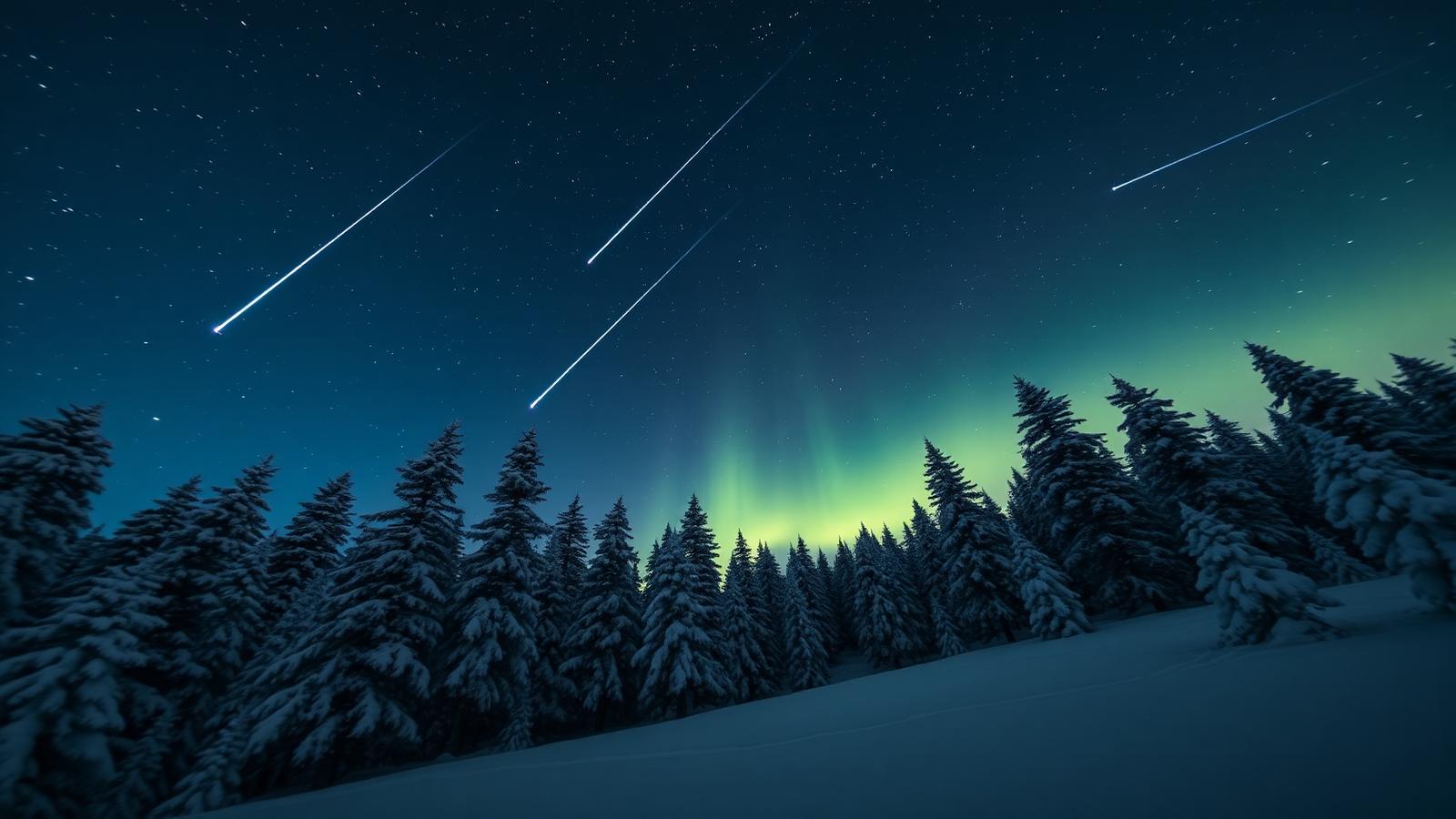
Meteor Shower · Geminids 2026
The Geminids: the year's most reliable shower, at up to 150/hour.
Geminid Meteor Shower 2026
The Geminid maximum falls on the night of 13–14 December 2026. A waxing crescent Moon sets before midnight, leaving the whole second half of the night completely dark — excellent conditions for the year's most productive meteor display.
- Peak night
- Dec 14
- Peak ZHR
- ~150/hr
- Moon at peak
- 23%
- Nights to peak
- 56
Location not set
Set a location for tonight's Geminid verdict
The Geminid peak date is fixed worldwide; radiant altitude, best hour and sky conditions are strictly local.
- Radiant altitude and compass bearing right now
- The best hour to be outside tonight
- Rates adjusted for your latitude and Moon
- Cloud cover for the peak window
Your choice stays in this browser. Nothing is sent to a SnapCosmos server.
Why 2026 matters
A late-rising Moon leaves the sky dark when it counts
The Geminids are the year's most productive shower. In 2026 the Moon co-operates — after midnight, the entire sky is yours.
The Moon at Geminid peak in 2026 is a waxing crescent, roughly 23% illuminated, that sets before midnight from most latitudes. Evening rates are reduced by moonlight, but the best part of the night — the hours around local 02:00 when the radiant is nearly overhead — falls in a completely dark sky. That's the window that matters.
For context: a full or gibbous Moon in the middle of the night — as in 2024 and again in 2029 — cuts the visible meteor count by roughly two-thirds. In 2026 you keep every faint streak that the Perseids in years past have washed out. The Geminids' natural ZHR of about 150 meteors per hour is the highest of any annual shower; under 2026's moon geometry, a rural sky can deliver a genuine 80–120 per hour in the pre-dawn hours.
The peak is forecast for approximately 08:00 UT on 14 December 2026 based on the International Meteor Organization's 2026 calendar. That timing favours observers in western North America and the Pacific, whose pre-dawn hours fall closest to maximum. Europe, Africa and western Asia observe the peak during their evening on 13 December and the following morning, still excellent. The Geminids' broad activity profile — meaningful rates for about 24 hours around maximum — means everyone on the night side of Earth gets a good show.
What you're actually seeing
Rocky dust from an asteroid at 35 km/s
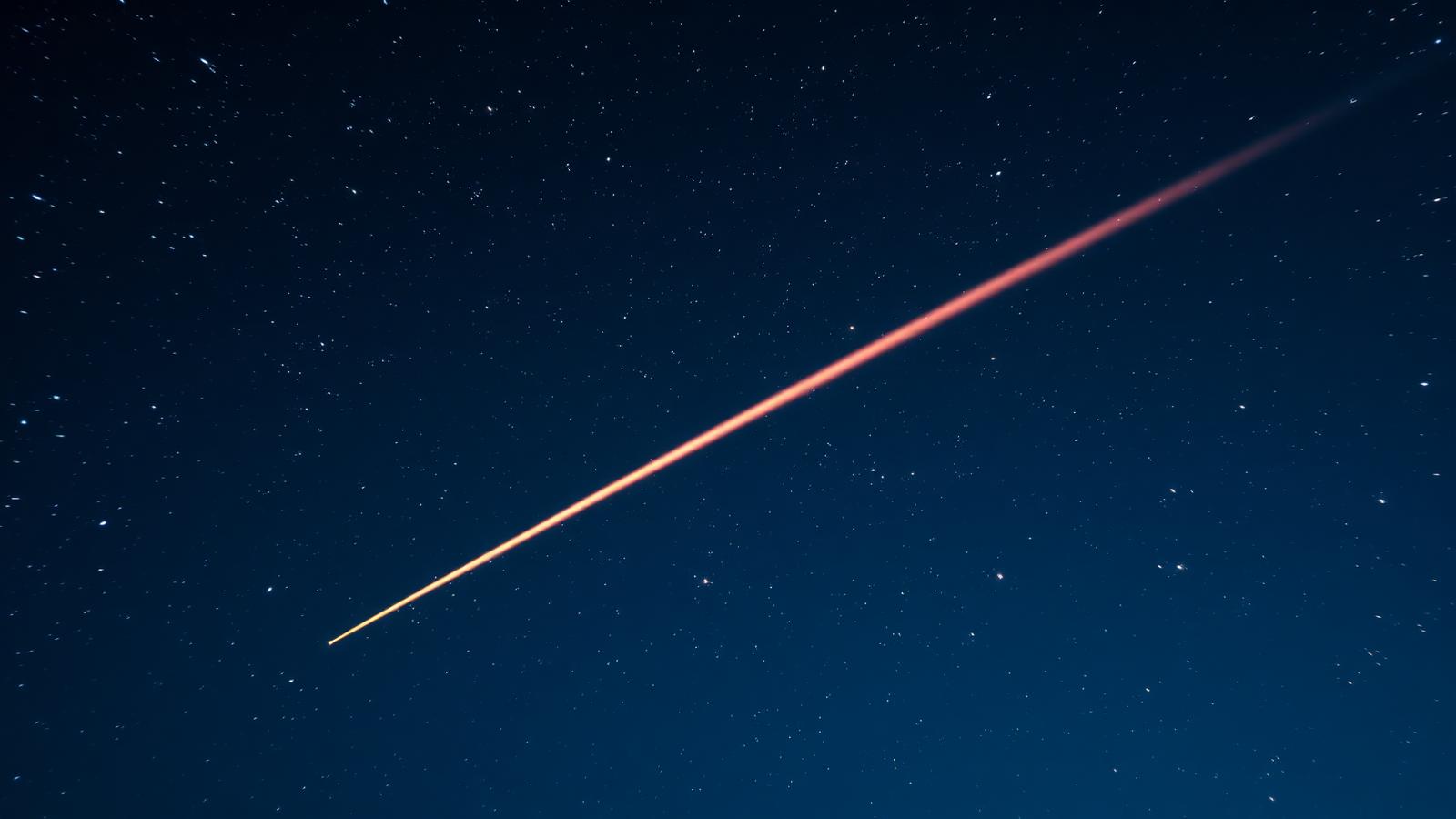
The Geminids are unique among the major annual showers: their parent body is not a comet, but an asteroid — 3200 Phaethon, a five-kilometre rocky object that swings closer to the Sun than any other named asteroid. When Phaethon heats up near perihelion its surface fractures and sheds dust in comet-like fashion, and that dust settles into a stream Earth crosses every December.
Because Phaethon's grains are denser and more mineral-rich than the fluffy cometary dust that produces the Perseids, Geminids look distinctly different in the sky. They enter the atmosphere more slowly — 35 kilometres per second versus 59 for the Perseids — which means individual meteors last longer and appear to move more sedately. They're also brighter on average, and colours are common: yellow-green from magnesium, orange from sodium, and occasional red from atmospheric oxygen and nitrogen at the higher energies.
The radiant sits within a degree of Castor, the brighter of the two "twin" stars in Gemini. Trace any real Geminid meteor backward and its line points to that spot; that is how you tell a shower meteor from a random sporadic. The shower has been active for millennia but was only recognised in the 1860s, and its intensity has been climbing steadily — Phaethon's stream is still evolving, and modern Geminids are noticeably richer than 20th-century records suggest.
How to watch
A field guide for a cold, dark night
The Geminids' great advantage is that they start early. Unlike summer showers where the radiant is only useful in the small hours, Gemini is 30° up by 21:00 local time from mid-northern latitudes. If you cannot stay out past midnight, the Geminids are still worth going out for — you'll see fewer per hour than the die-hards, but you'll see plenty.
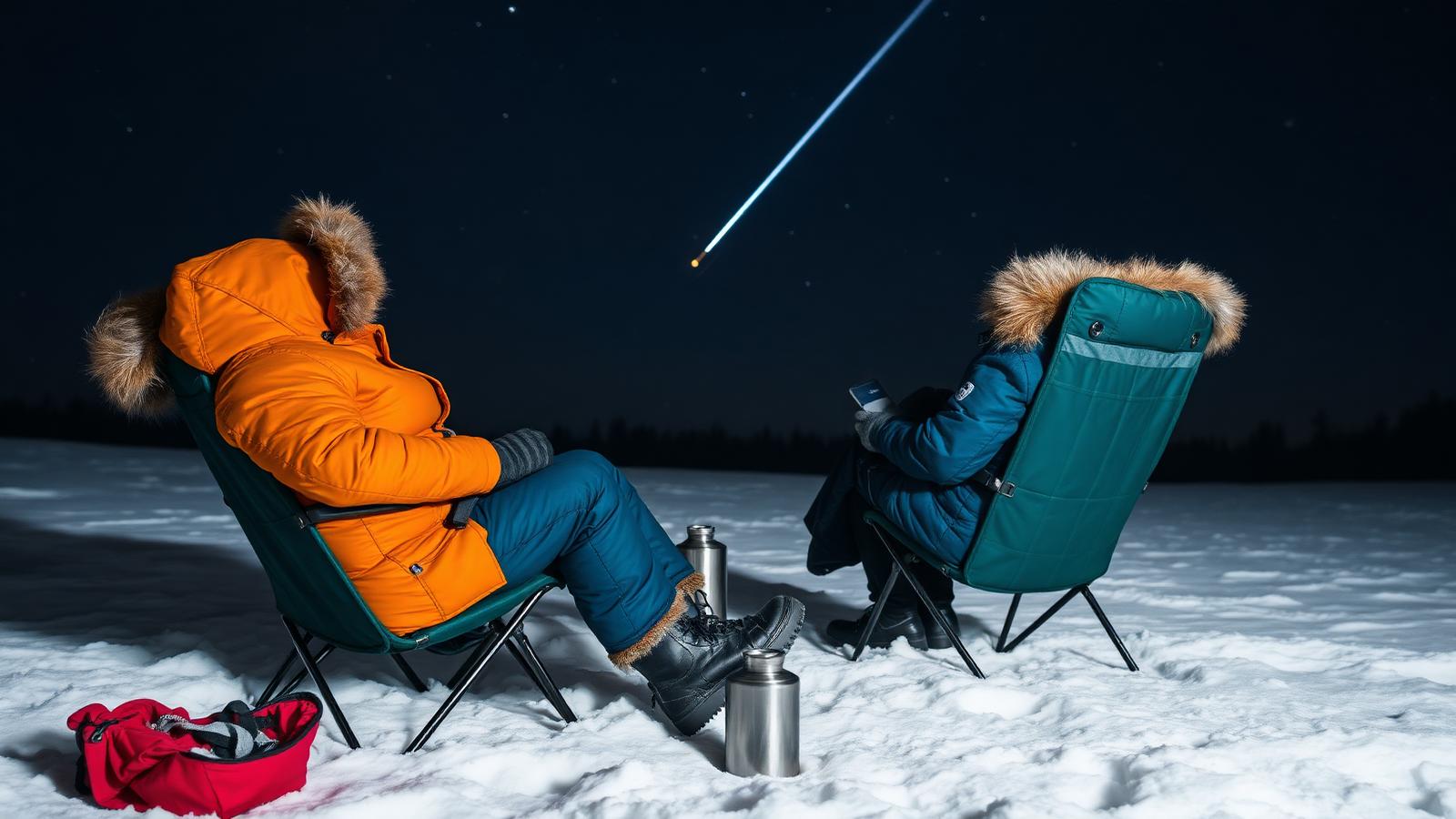
Dress for winter. This is December in the Northern Hemisphere. Standing still in an open field at −5 °C (23 °F) is nothing like a hike at the same temperature. Thermal base layers, a heavy insulated coat, a warm hat, insulated boots, gloves, and a sleeping bag on top of a foam pad are the minimum. A flask of something hot and a snack change the experience entirely.
Get away from town. A twenty-minute drive out of a city typically doubles your meteor count. Aim for a site with a clear northeastern-to-southern horizon — Gemini rises from the northeast in evening and swings south through the night. Trees or a ridge on that side block the direction you want most.
Give it time. Meteors are clumpy. Five minutes of empty sky followed by three meteors in a minute is normal. A single honest hour is the minimum; two hours is much better. Lie back, look up, and let your peripheral vision do the work — meteors are caught out of the corner of the eye more often than they are caught head-on.
Photographing the Geminids
Wide lens, open aperture, patient camera
Meteor photography is a numbers game: you cannot predict when a meteor will strike, so you shoot continuously and pray. Use the widest lens you own (14–24 mm on full frame, 10–18 mm on APS-C), open the aperture as wide as it goes (f/2.8 or faster), set ISO 3200–6400, and use continuous 15–20-second exposures. Point the camera about 40° away from Castor — that's where the trails are longest.
Focus manually on a bright star (Capella is well placed on December evenings) and lock the focus with tape. Use an intervalometer or the camera's built-in interval timer with a 1-second gap; that gap saves the battery and gives you a way to reject frames with satellite streaks. Shoot for at least an hour to accumulate enough frames to have several meteors on file.
Winter cold drains batteries fast. Keep spare batteries in an inside pocket, close to your body, and rotate them into the camera when the active battery falters. Dew is less of a problem than in summer, but a lens hand-warmer wrapped around the lens barrel prevents frost on cold nights when humidity is high.
Common questions
Frequently asked
Frequently asked questions
Related
Keep exploring tonight's sky
All meteor showers this year
Every active shower with peak dates and moon conditions.
Perseid Meteor Shower 2026
August's moonless Perseid peak, the year's other headline shower.
Tonight's timeline
Sunset, twilight, moonrise and darkness times for your location.
Moon tonight
Phase, illumination and moon-set times for your location.
What time does it get dark tonight?
Twilight and astronomical darkness times.
Aurora tonight
Live Kp forecast — northern lights sometimes overlap Geminid peak week.
Sources: peak time and active period from the International Meteor Organization 2026 Meteor Shower Calendar. Moon phase computed via astronomy-engine using the same algorithms as NASA JPL DE-4XX ephemerides. Radiant position (α = 07h 28m, δ = +32°) from the IAU Meteor Data Center. Asteroid 3200 Phaethon orbital data from NASA JPL Small-Body Database. See editorial policy for how quantitative claims are checked.