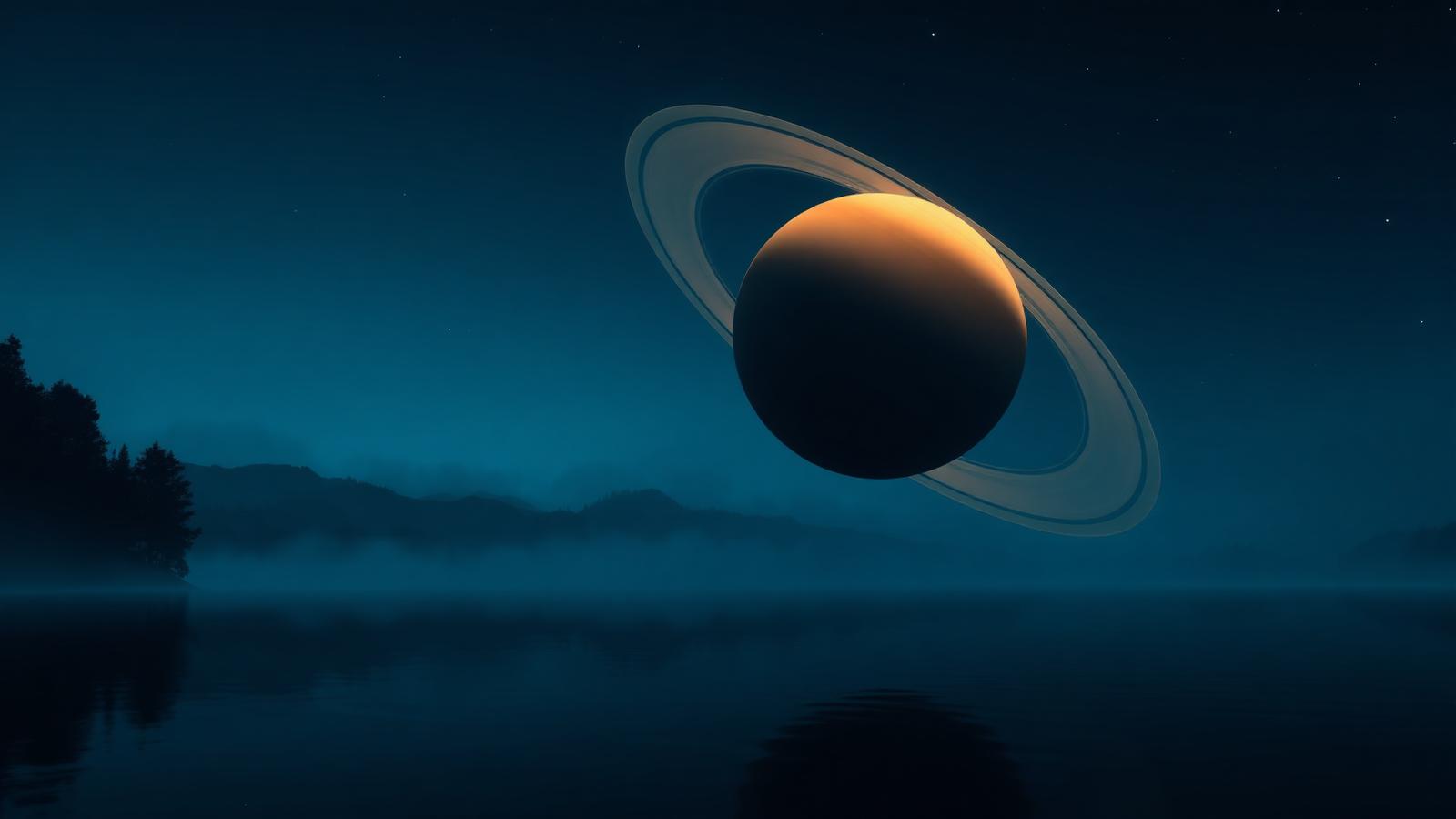
Planet event · Saturn opposition 2026
A once-a-decade Saturn: bright, all-night, and almost ringless.
Saturn Opposition 2026 — Rings Nearly Edge-On
Saturn reaches opposition on 21 September 2026 in Pisces. Because Earth is passing through Saturn's ring plane in this era, the rings will appear only 1.7° from edge-on — thinner than at any opposition since 2009. The planet is easy to find with the naked eye at magnitude 0.4, and rises at sunset all through September and October.
- Opposition
- Sep 21
- Magnitude
- +0.4
- Ring tilt
- 1.7°
- Days to opposition
- 27 past
Location not set
Set a location for tonight's Saturn view
Opposition happens on the same date for every observer. How high Saturn climbs from your latitude decides how good it actually looks.
- Saturn's altitude and bearing tonight
- The best hour to observe
- Altitude at opposition from your latitude
- Cloud cover folded into the verdict
Your choice stays in this browser. Nothing is sent to a SnapCosmos server.
Why this opposition is different
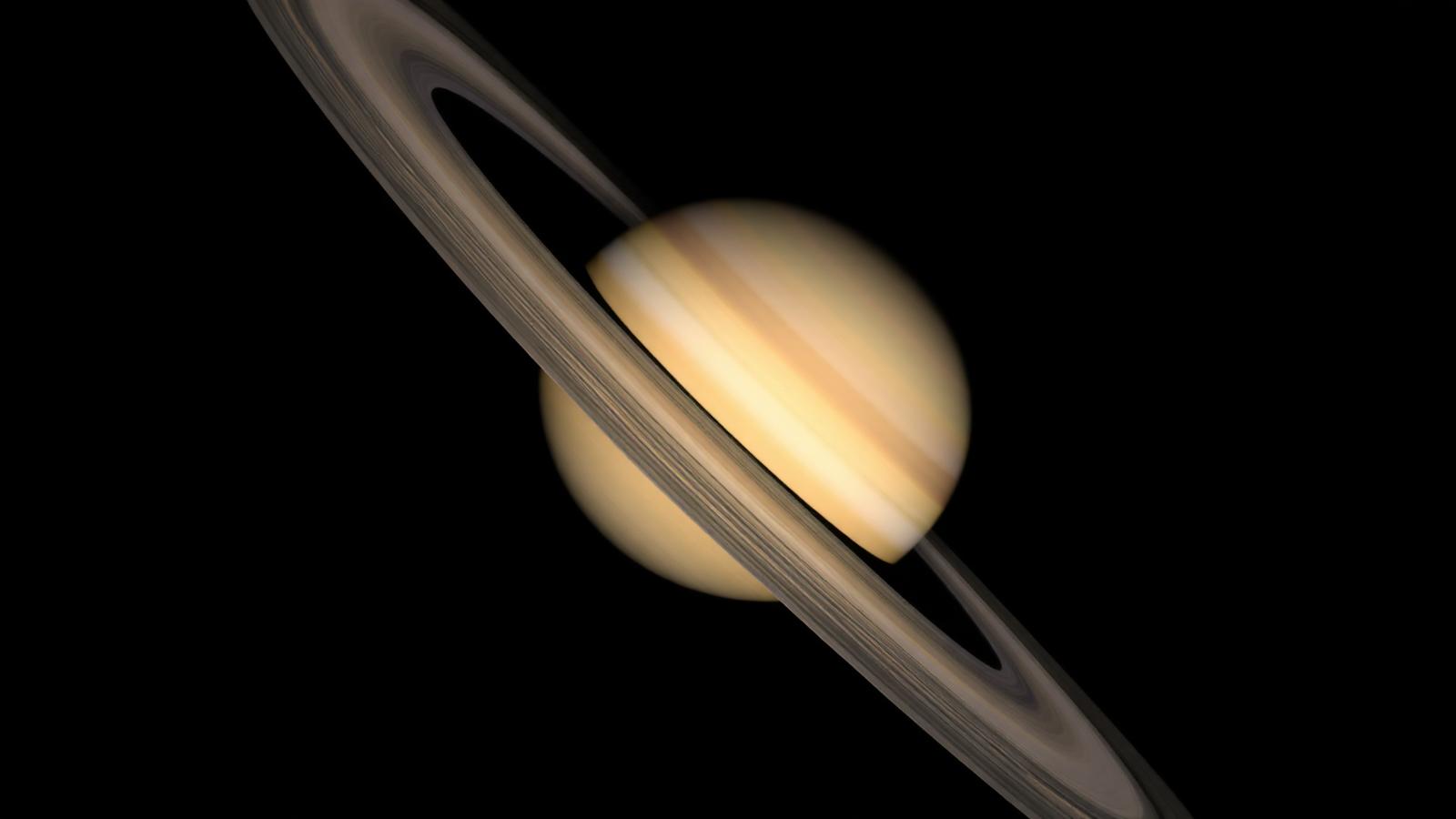
A razor line, not an open ellipse
Every generation gets two 'iconic' Saturns and two 'strange' ones. 2026 is a strange one — and that is exactly why it is worth catching.
Saturn's rings are, on cosmic scales, absurdly thin: about 10 metres thick across a system 280,000 kilometres wide. As Earth and Saturn orbit the Sun on slightly tilted planes, our view of that plane cycles through a roughly 15-year rhythm — from fully open (about 27° tilt) to edge-on and back.
The rings crossed edge-on on 23 March 2025, briefly disappearing from all but the largest professional telescopes. Through the rest of 2025 and 2026 they are reopening — but slowly. At opposition on 21 September 2026 the ring plane is tilted just 1.7° from our line of sight. In photographs the system looks less like a hat and more like a compass needle drawn across Saturn's disc.
The last time an opposition happened at a tilt this shallow was 2009. The next time will be around 2039. Everything between is the "photograph-Saturn" era. If you have never seen Saturn with the rings closed, this is the year — and if you have, it will not look the same as any Saturn photograph you have ever taken.
Local circumstances
What opposition actually means
An outer planet is "at opposition" when Earth passes between it and the Sun. Three things happen at once. The planet is closest to us (this year, 8.06 astronomical units from Earth — about 1.2 billion kilometres). It is brightest, both because it is closer and because we are looking straight at its Sun-lit hemisphere with no shadow. And it is up all night: it rises when the Sun sets, transits due south (from the Northern Hemisphere) around local midnight, and sets when the Sun rises.
The opposition itself is a moment, not a season. But Saturn stays within a fortnight of that geometry — and within 0.1 magnitude of opposition brightness — from about early September through mid-October. Practically, that means every clear night from August through November 2026 is a viable Saturn night; only the times of night change.
How to observe
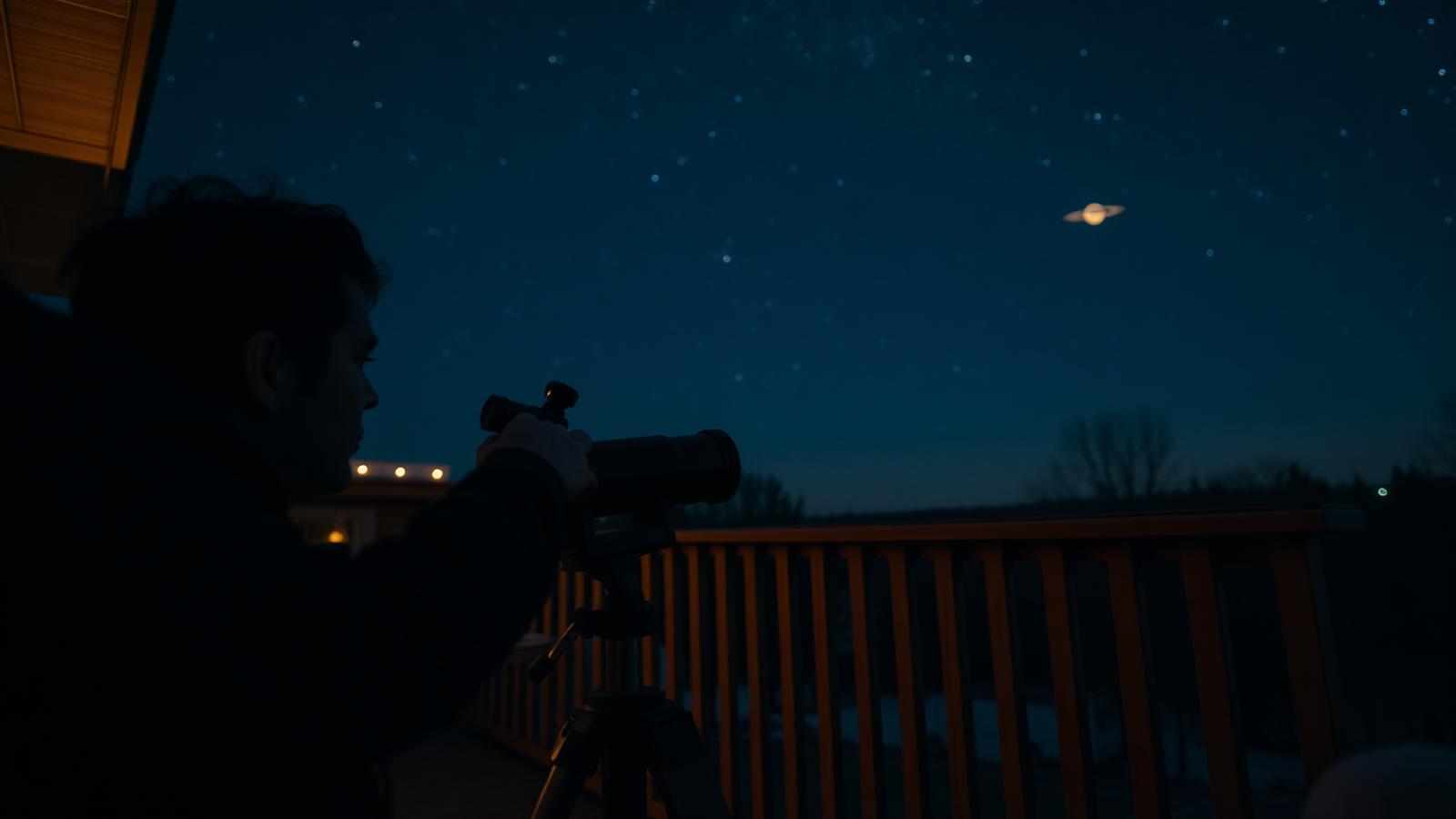
Naked eye, binoculars, telescope
Naked eye. Saturn looks like a bright, steady, pale-yellow star. The fastest way to identify it: it does not twinkle. Stars twinkle because the atmosphere refracts their point-source light in unpredictable directions; planets are small discs, not points, and average that turbulence out.
Binoculars. 10× binoculars — the standard sky-watching pair — show Saturn as a distinctly oval blob. The "handles" you see are the ring extensions on either side of the disc. You will not see the rings as separate structures, but you will see that Saturn is not round. It is enough to know you are looking at Saturn.
Small telescope (60–100 mm). At 60× the ring line is unmistakable — a thin bright bar drawn straight across the planet. At 150× you can see the shadow of the rings on the disc, a dark hairline that gives Saturn its three-dimensional feel. Titan sits nearby as a magnitude-8 star.
Larger telescope (150 mm+). With the rings nearly edge-on, forget the Cassini division — it is invisible at 1.7° tilt. But the atmospheric bands on Saturn's disc become clearer than in a ring-open year, and moons that normally hide behind the rings pass across the disc in front of it. The best magnification is whatever your seeing allows without softening detail — usually 150–250×.
Nearby that same night
Neptune, and a possible Saturn–Neptune conjunction
Neptune reaches its own opposition just one day earlier, on 20 September 2026 — in the same constellation, Pisces. The two planets sit within a few degrees of each other through late September and October, low-power binoculars showing both in a single field of view.
Neptune (magnitude 7.8) is a proper binocular target: a small, deep-blue point of light. Using Saturn as a naked-eye anchor, sweep 3–4 degrees to Saturn's west with 10× binoculars and you should catch it. Verify by returning a night or two later — Neptune moves visibly against the background stars over several days.
Common questions
Frequently asked
Frequently asked questions
Related
Keep exploring tonight's sky
Tonight's sky guide
Sunset, twilight, moonrise and darkness times for your location.
Moon tonight
Phase, illumination and rise/set times for your location.
Planets tonight
Which planets are visible after sunset and before dawn.
Milky Way tonight
When the Milky Way core is above your horizon.
Meteor showers tonight
Active showers, peak dates and effective rates for your sky.
ISS passes tonight
Live pass times with direction and altitude for your location.
Sources: opposition date and magnitude from the IMCCE astronomical almanac. Ring-tilt (B-angle) computation from JPL Horizons. Saturn ephemeris via astronomy-engine using the same Meeus / JPL DE-4XX algorithms as NASA reference software. See editorial policy for how quantitative claims are checked.